Turn any article into a podcast. Upgrade now to start listening.
Premium Members can share articles with friends & family to bypass the paywall.
Editor’s Note: For the week leading up to Thanksgiving, we’re unlocking The Morning Dispatch for everyone—no paywalls. If you’re a new reader or are on the free list, we hope you enjoy the complete TMD experience. And if you’re a member, thank you for your support. We hope you’ll consider forwarding these next few editions to friends and family you think would value our work.
Happy Monday! Pope Leo XIV revealed on Friday that he uses a different Wordle starting word each day, a strategy one can only recommend if you have a direct line to God.
Quick Hits: Today’s Top Stories
- More details and contradictory information emerged over the weekend about a broad, 28-point framework for a prospective Russia-Ukraine peace deal. Initial reporting suggested this was a U.S.-devised plan, which President Donald Trump had given Ukraine until November 27 to accept, but the president said on Saturday that it was not his “final offer” to Ukraine. A bipartisan group of U.S. senators said Saturday that Secretary of State Marco Rubio told them during a conference call that the White House did not propose the deal, and it was—per Angus King—a “wish list of the Russians.” Rubio went on to refute this characterization, and a State Department spokesperson said the claims were “blatantly false.” Rubio and other White House officials met with senior diplomatic and security officials from Ukraine, the United Kingdom, and the European Union in Geneva on Sunday to discuss terms, with Rubio describing the summit as the Trump administration’s “most productive and meaningful meeting” with Ukraine this year. When details of the plan first emerged last week, Ukrainian President Volodymyr Zelensky described the situation in a Friday video address as his country facing the choice of either “losing its dignity or the risk of losing a key partner.” That same day, Kremlin spokesman Dmitry Peskov said that Russian officials were still waiting for the U.S. to share an official proposal, but that the Kremlin is open to “peace negotiations.” Russian forces launched a drone attack on Ukraine’s Kharkiv region last night, killing at least four.
- The Israel Defense Forces (IDF) killed Hezbollah’s military chief of staff, Haytham Tabatabai, during an airstrike yesterday targeting a multi-story building in the Lebanese capital city of Beirut that Israel believed to be housing terrorist infrastructure. On Saturday, the IDF launched strikes against Hamas targets in the Gaza Strip, killing at least five senior members of the terrorist organization, according to the office of Israeli Prime Minister Benjamin Netanyahu. Israeli officials said their forces moved ahead with the strikes after Hamas militants opened fire on Israeli soldiers. Hamas initially told mediators that Israel’s strikes could mean the end of the ongoing truce, but a spokesperson for the terror group disputed that claim later that day. Meanwhile, the Associated Press reported that Netanyahu convened a cabinet meeting to address the rising violence from Israeli settlers against Palestinians in the West Bank. On Sunday, Israeli government prosecutors filed terrorism-related criminal charges against one Israeli teenager who allegedly attacked Beit Lid, a Palestinian village in the West Bank.
- GOP Rep. Marjorie Taylor Greene of Georgia announced on Friday that she would resign from Congress, effective January 6, 2026, following public attacks from Trump. In a video message, Greene said she decided to avoid a “hurtful and hateful primary against me by the president we all fought for.” On Saturday, Trump posted on Truth Social that “Marjorie went BAD,” describing his now-former ally as a “traitor.” That same day, Trump told reporters that he “disagreed with her philosophy” but added that Greene is a “nice person.” Greene said in an X post on Sunday that she had no intention of launching a presidential campaign, stating that she “laughed at” such speculation. Greene announced in July that she would not run for governor of Georgia in 2026, but has not commented on the race since then. “If I wanted to run we all know I would win,” she tweeted at the time. “It’s not even debatable.”
- New York City Mayor-elect Zohran Mamdani met with Trump at the White House on Friday, with the discussion surprisingly positive and friendly. The president said he is “very confident that [Mamdani] can do a good job,” adding that the mayor-elect’s tenure may “surprise some conservative people.” The two spoke with reporters from the Oval Office later that day, and, when one reporter asked Mamdani whether he still believed Trump to be a fascist, the president intervened, and stated, “That’s okay, you could just say, ‘Yes,’” adding that “it’s easier than explaining it.” On Sunday, Mamdani said he stood behind his past comments. Talking to the press after the meeting, Trump said he disagreed with Republican Rep. Elise Stefanik’s claim that Mamdani is a “jihadist,” adding that Stefanik—who is currently running for governor of New York—was just “out there campaigning.” Trump had previously threatened to pull federal funding to New York City should Mamdani win the election earlier this month, but White House National Economic Council director Kevin Hassett said on CNN’s State of the Union on Sunday that “it feels like he [Trump] doesn’t mean it now,” adding that “we’ll have to wait and see what Mamdani does” and noting that the White House was pleased with Mamdani’s decision to retain the city’s incumbent police commissioner, Jessica Tisch.
- Gunmen in Nigeria continue to hold hostage 253 students—between 10 and 18 years old—as well as 12 teachers, following their attack on a Catholic school on Friday. They had initially taken 303 children hostage, but 50 escaped captivity on Friday and Saturday. An armed group attacked another church last Wednesday in Nigeria’s western Kwara region, killing two people and also taking hostages. Nigerian officials announced that many public schools will be temporarily closed amid the recent violence. Pope Leo XIV has called for an “immediate release” of all hostages.
Capitol Gains
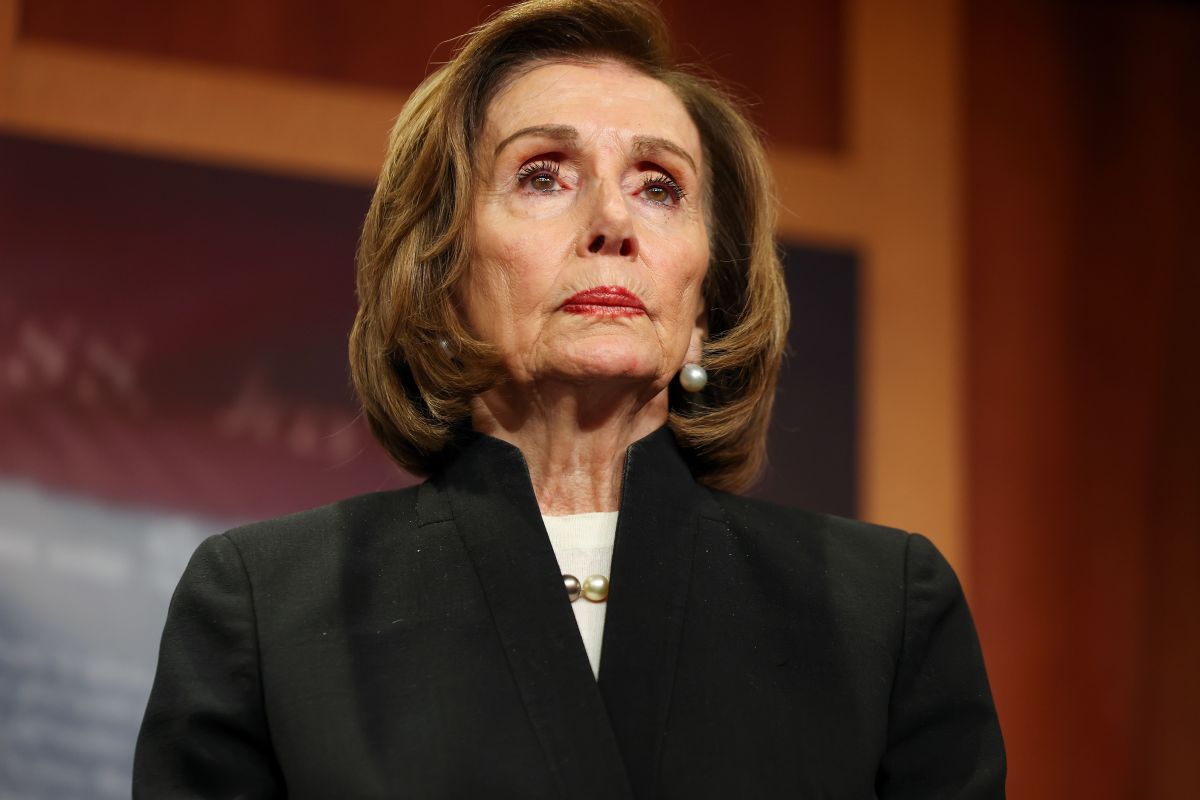
On Wednesday morning, four members of Congress gathered for a press conference outside a committee hearing room. The presser, the bill they were pushing, and the hearing discussing it were all about a perennial, bipartisan issue: banning congressional trading of individual stocks. Their bill, the Restore Trust in Congress Act, would prohibit members of Congress, along with their spouses, dependent children, and trustees, from buying and selling individual stocks. Members would be allowed to invest only in diversified mutual funds and exchange-traded funds (ETFs), as well as in precious metals.
The bill’s four advocates spanned the ideological spectrum: rank-and-file Democratic Rep. Seth Magaziner, moderate Republican Rep. Brian Fitzpatrick, progressive Democratic Rep. Pramila Jayapal, and right-wing spending hawk, Rep. Tim Burchett. Nothing remarkable came from the following 90-minute hearing, but GOP Rep. Chip Roy, another co-sponsor of the legislation, and other lawmakers said Friday that they are pushing for a vote on the bill by the end of this year. But we’ve been here before—and even if the legislation were to pass the House, it’s not clear that the Senate would take it up.
Burchett himself did not sound optimistic in an interview over the weekend. “We’re not going to pass anything,” he told John Catsimatidis on Sunday. “Or if we do pass it, the Senate will either—it’ll go and fall into a great abyss over there, they will never bring it up, or they’ll pass something a lot stronger, or something that we won’t agree to, and then both sides will go home and say, ‘Oh, we tried.’ And they’ll move onto another bright, shiny object.”
Typically, The Morning Dispatch’s main story is cut off here, with the full item reserved for paying members. We are unlocking the newsletter this week to give free readers a taste of what they’re missing out on. To get the full version in your inbox every day—and unlock all of our stories, podcasts, and community benefits—join The Dispatch as a paying member.
Although members of Congress are currently prohibited from trading on nonpublic information courtesy of the 2012 STOCK Act, their routine access to market-moving information in closed-door hearings—and high-profile examples of exceedingly well-timed trades—has kept speculation buzzing.
In 2022, for example, then-Speaker Nancy Pelosi’s husband Paul—who owns an investment firm—purchased more than $1 million in Nvidia call options weeks before the House voted on legislation providing massive subsidies to chip manufacturers. (After criticism, he sold them for a loss days before the vote). He sold at least $500,000 in Visa stock in July 2024, a few months before the Justice Department filed an antitrust lawsuit against the company. The retiring lawmaker’s representatives have repeatedly denied any wrongdoing, but her husband’s trading record has been so lucrative—up 65 percent in 2023, according to a report from financial analytics platform Unusual Whales, compared to the S&P 500’s 23 percent—that there’s an ETF with the ticker “NANC” that tracks stocks bought and sold by Democratic members of Congress.
In theory, the implied wrongdoing—Nancy Pelosi feeding insider information to her husband, who then trades on it—is already illegal under the STOCK Act. But even if members haven’t explicitly broken the law, advocates for additional legislation still believe there are reasons to prohibit lawmakers from having a personal financial interest in the success of individual companies.
“The real point that comes out is that it raises so many questions as to what’s going on,” Kedric Payne, who leads the ethics program at the Campaign Legal Center, told TMD. “It’s a simple fact that you have questions as to whether it’s insider trading, or if they just have so much information that they know—that technically may be public, but not widely known publicly—that allows them to make these trades.”
Concerns over members of Congress unfairly benefiting from stock trades go back more than 150 years. In the 1860s and 1870s, fraudsters set up a phony construction company, Crédit Mobilier, ostensibly to build the Union Pacific Railroad, and conned the federal government out of $44 million. Those who ran the scheme bribed members of Congress with low-priced company stock in exchange for a lack of oversight.
By the 2010s, the primary concern was insider trading—which was not explicitly banned—and in 2011, CBS News’ 60 Minutes ran an influential segment on congressional stock trading. The resulting backlash played a significant factor in the passage of the Stop Trading on Congressional Knowledge Act a year later, which barred the practice and required members to disclose any purchases of securities totaling more than $1,000 within 30 to 45 days.
But many advocates of a blanket ban on individual stock ownership argue that the law is not strong enough to deter insider trading. Members often fail to disclose their trades on time, and no member of Congress has ever been prosecuted under the STOCK Act. The bill also did nothing to change how owning individual stocks could influence lawmakers’ policy decisions.
That said, although there are plenty of high-profile examples of savvy moves to point to, a broader look at the performance of congressional investing is more mixed. Bruce Sacerdote, an economics professor at Dartmouth College, has conducted several studies comparing trades by members of Congress to the overall market and told TMD that there is “definitely not” a broad phenomenon of lawmakers outperforming the market and beating out other traders. “If there was any debate over what the average returns are, that’s been settled,” Sacerdote said. “They’re slightly negative, relative to the market.”
One study Sacerdote performed analyzed publicly disclosed trades from the beginning of 2012 to the end of 2020, and found that even the most successful investors in Congress performed no better than picking stocks by random selection.
Another study focused specifically on lawmakers’ trades in 2020, the same year that the Department of Justice probed several stock sales made by some senators in late January or early February as they received early briefings on the COVID-19 pandemic. The department later chose not to bring charges. But even in 2020, stocks purchased by members of both the House and Senate still generally underperformed a size-and-industry-adjusted benchmark, with senators—who theoretically would have more access and influence—underperforming the benchmark by 3.1 percent after six months, according to Sacerdote’s research.
“A lot of the things where there’s pretty strong allegations that say senators or congresspeople sold ahead of something bad happening—like COVID becoming a thing—even those trades end up not working out,” Sacerdote told TMD.
Even before the STOCK Act, research was mixed on whether members of Congress showed a palpable advantage. One survey of stock trades between 1993 and 1998 found that senators’ purchases beat the market by 0.85 percent per month, or more than 10 percent per year. But another study that looked at trades from 2004 to 2008 found that an average member of Congress underperformed a passive index fund by 2 to 3 percent per year.
In the case of the Pelosis, whenever they disclose buying or selling a stock, tens of thousands of retail traders who follow accounts like @pelositracker—or use copy-trading apps built around it—automatically pile into the same trades, convinced she has insider knowledge. That itself may drive the relevant share prices up or down.
Nevertheless, there is still broad bipartisan support for banning members of Congress from trading individual stocks, both in Congress and among the American public. A 2023 poll from the University of Maryland found that 86 percent of Americans support a ban on congressional stock trading. That popularity is probably one reason why, though no such ban has been enacted, few members of Congress have publicly opposed it. Even Pelosi has stated support for various proposals.
Republican Sen. Tommy Tuberville—who will retire from Congress after his current term ends to run for governor of Alabama—is one of the few members who have consistently opposed a ban. “I’ve never been for that,” he told TMD, “because it’s a free country.”
Today’s Must-Read


Every region has its anthem—usually a sunny tune along the lines of “Sweet Home Alabama,” “Georgia On My Mind,” or anything by the Beach Boys. But author Zachary Michael Jack makes a bold case that the Midwest’s defining song is Gordon Lightfoot’s haunting “The Wreck of the Edmund Fitzgerald,” a mournful dirge about a shipwreck that killed 29 sailors. As the tragedy marks its 50th anniversary this year, Jack explores why a relentlessly dark ballad in a minor key became the soundtrack for Great Lakes country and its November gales. Part regional defense, part musical eulogy, this essay argues that Middle America needs a song that honors the dead and acknowledges tragedy—not just good vibes and nostalgia.
Toeing the Company Line

Is ‘Christian Zionism’ Really Heretical?
On Dispensationalism, antisemitism, and bad arguments.

Avoiding the New Anti-Toy
This holiday season, resist buying AI novelties for kids.

To Be or Not to Be a Think Tank
What we stand to lose with the slow death of American policy institutes.

The Damned Mob of Swifties
Nathaniel Hawthorne, Taylor Swift, and the sentimental genius of women’s art.

More Shame, Please
On the uses, and virtue, of shame.

In Other News
Today in America:
- Supreme Court Justice Samuel Alito issued a temporary ruling allowing Texas to adopt its new redistricting proposal for the 2026 midterm elections, pending a merits case on the new map’s constitutionality. This reversed an earlier three-judge district court decision.
- Robert F. Kennedy Jr. personally instructed a Centers for Disease Control and Prevention website page to state that “the claim ‘vaccines do not cause autism’ is not an evidence-based claim.”
- The Trump administration sued California’s state government and public higher-education systems for providing in-state college tuition and other state-subsidized opportunities for illegal immigrants.
- FBI Director Kash Patel is facing criticism for using the agency’s SWAT team resources to protect his girlfriend, right-wing activist and singer Alexis Wilkins.
- The Federal Aviation Administration told American airline pilots to “exercise caution” while flying in Venezuelan airspace, warning that “threats could pose a potential risk to aircraft at all altitudes.”
- An FBI investigation into the July 2024 assassination attempt against Trump in Butler County, Pennsylvania, found that the would-be assassin, Thomas Matthew Crooks, acted alone.
Around the World:
- Floods and landslides in central Vietnam have killed at least 90 people.
- Bank of America, Citigroup, and JPMorgan Chase reportedly shelved a planned $20 billion loan to the Argentine government and are offering smaller, short-term loans instead.
- Voters in the tropical West African coastal nation of Guinea-Bissau voted on Sunday in the country’s presidential and legislative elections. Incumbent President Umaro Sissoco Embaló is opposed primarily by political newcomer Fernando Dias da Costa.
- Former Brazilian President Jair Bolsonaro was arrested at his home after he allegedly attempted to remove a court-ordered ankle-monitoring device. Bolsonaro was convicted of conspiring to retake political power by a coup and faces a 27-year sentence.
- Slovenian voters rejected a ballot referendum to legalize assisted-suicide services for individuals diagnosed with a terminal condition.
- Iran requested the support of foreign nations to combat and contain a weeks-long wildfire blazing across the country’s Hyrcanian Forests, which, as of 2019, have been designated a UNESCO World Heritage Site.
On the Money:
- New court filings suggest Meta scaled back or reorganized some internal research teams after internal studies into possible links between its platforms and mental-health harms reported negative results.
- The Bureau of Labor Statistics said it would not release the October consumer price index report—a common inflation metric—because the government shutdown had paused data collection needed to produce it.
- Nevada fined the Caesars Palace casino in Las Vegas $7.8 million for allegedly violating anti-money laundering statutes. The casino is accused of failing to verify large sums of money used by a bookmaker who took illegal bets from high-value gamblers, including the former interpreter for Los Angeles Dodgers’ superstar Shohei Ohtani.
- NCAA members voted to bar all affiliated student-athletes and athletic department staff from gambling on professional sports.
- Comcast, Netflix, and Paramount all reportedly submitted bids to purchase Warner Bros. Discovery. The company announced last month that it would consider a full sale or partial sell-off of its major film studio.
- X—the platform formerly known as Twitter—introduced a new feature that displays the country that accounts are based in.
Worth Your Time:
- “We Asked Roblox’s C.E.O. About Child Safety. It Got Tense.” (New York Times)
- Stéfanie Prezioso argues that defining “fascism” solely through a historical lens could blind us to its potential return in politics. (Jacobin)
- Tatiana Schlossberg, a granddaughter of former President John F. Kennedy, writes about having a terminal leukemia diagnosis. (New Yorker)
- The 95-year-old Warren Buffett reflects on his life ahead of Thanksgiving. (Berkshire Hathaway)
- Angadh Nanjangud on inflatable space stations. (Works in Progress)
- Erin Nystrom on today’s plastic surgery trends. (Human, Being)
Presented Without Comment
Associated Press: Federal Prosecutors Say 2 Texas Men Made Plans To Take Over a Haitian Island
Also Presented Without Comment
The Guardian: Elon Musk’s Grok AI Tells Users He Is Fitter Than LeBron James and Smarter Than Leonardo da Vinci
Let Us Know
Have any thoughts or questions about today’s newsletter? Drop us a note in the comments or by emailing us at tmd.questions@thedispatch.com. We read every submission, and your message could be featured in an upcoming “Behind the Scenes” segment.
Have any thoughts or questions about today’s newsletter? Become a member to unlock commenting privileges and access to a members-only email address. We read every submission, and answer questions in the following edition of TMD.





Please note that we at The Dispatch hold ourselves, our work, and our commenters to a higher standard than other places on the internet. We welcome comments that foster genuine debate or discussion—including comments critical of us or our work—but responses that include ad hominem attacks on fellow Dispatch members or are intended to stoke fear and anger may be moderated.
With your membership, you only have the ability to comment on The Morning Dispatch articles. Consider upgrading to join the conversation everywhere.