Turn any article into a podcast. Upgrade now to start listening.
Premium Members can share articles with friends & family to bypass the paywall.
Happy Tuesday! A Frankfurt man found a winning lottery ticket worth $18 million in his coat pocket six months after purchasing it, discovered only when autumn weather sent him reaching for the jacket this weekend. In unrelated news, TMD’s editor has suddenly developed an interest in vintage German outerwear.
Quick Hits: Today’s Top Stories
- Democratic and Republican congressional leaders met with President Donald Trump on Monday to discuss a potential deal to avert a government shutdown at 12:01 a.m. tomorrow. House Minority Leader Hakeem Jeffries, Senate Minority Leader Chuck Schumer, House Speaker Mike Johnson, and Senate Majority Leader John Thune left the meeting without a deal. “There are still large differences between us,” said Schumer. Democrats have said they are willing to withhold Senate support for a stopgap spending deal that recently passed the House, potentially causing a shutdown, unless their demands to extend Affordable Care Act tax credits are met. Trump and Vice President J.D. Vance did say, however, that they would be open to negotiating over health care if Democrats avoided shutting down the government.
- On a visit to the White House on Monday, Israeli Prime Minister Benjamin Netanyahu held a joint press conference with the president at which Trump announced. the framework of a peace deal for the war in Gaza. Netanyahu said he agreed to the terms, which call for an immediate ceasefire; the exchange of hostages and prisoners; a staged Israeli withdrawal from Gaza; and the installation of a transitional government led by “qualified Palestinians” and international experts, and overseen by a “Board of Peace,” chaired by Trump and including former British Prime Minister Tony Blair. Trump warned that if Hamas did not agree to the deal, he would give full U.S. support to Israel’s future efforts to prosecute the war against Hamas. Netanyahu also formally apologized to Qatar for impinging on the country’s sovereignty by conducting strikes against Hamas in the Qatari capital of Doha earlier this month, expressing “regret,” according to a White House statement. Hamas representatives said that they would review the deal.
- Oregon and the city of Portland sued the Trump administration on Sunday in an effort to block the deployment of the Oregon National Guard to Portland. “The facts cannot justify this overreach,” wrote Oregon Attorney General Dan Rayfield and Portland City Attorney Rob Taylor in the suit, arguing that the move was an unconstitutional abuse of power. Oregon Gov. Tina Kotek, a Democrat, said Monday that Trump had told her he had heard of fires in the city and that she believed that he was referring to videos from 2020. “I told him in very plain language there is no insurrection or threat to public safety that necessitates military intervention in Portland or any other city in our state,” she said.
- The civil rights division of the Department of Health and Human Services announced on Monday that it is initiating the debarment process for Harvard University, potentially blocking the institution from receiving future federal research grants. HHS’ Office for Civil Rights informed Harvard in a letter that the administration did not believe the university had done enough to address antisemitism on campus, leading the government to conclude that it was not a responsible enough entity to do business with the government. Harvard did not make a public statement in response to the news.
- The Trump administration announced plans Monday to increase coal production and roll back regulations, including opening 13.1 million acres of federal land for mining, reducing the royalty rate for coal extraction, loosening enforcement of coal plant pollution and wastewater regulations, and directing $625 million in federal funds to retrofit and extend the life of aging coal facilities. Coal produced just 16 percent of the United States’ electricity in 2023, but administration officials insist that expanding coal plants is essential for economic growth, national security, job creation, and meeting the rising electricity demand from AI data centers. “Beautiful, clean coal will be essential to powering America’s reindustrialization and winning the AI race,” U.S. Secretary of Energy Chris Wright said. Analysts remain skeptical about a long-term U.S. coal rebound, as economics increasingly favor less carbon-intensive fuels.
- Iranian authorities on Monday hanged a man that the government claimed was one of “the most important spies” for Israel. The Iranian judicial service said that Bahman Choubi-Asl had been convicted on charges of “corruption on earth” for allegedly helping Israeli intelligence to gain access to Iranian data centers and obtain government data. Over 1,000 people have been executed in Iran this year, 11 of whom were sentenced to death for spying. The same day, the United States deported around 100 Iranian nationals to Tehran on Monday following a rare agreement between Washington and Iran, the New York Times reported. Details about the deportees’ identities were not disclosed, and neither the White House nor the president has made any public comments about the move.
- Artificial intelligence company Anthropic on Monday released its latest large language model, Claude Sonnet 4.5, which ranks as the best coding model on the market, according to industry benchmark tests. Anthropic claimed that Sonnet 4.5 could operate autonomously for up to 30 hours, writing 11,000 lines of code in the process, an increase from the seven hours of autonomous work the previous model was capable of. The new model was released alongside new features for coders and expanded availability of Claude for Google Chrome extension. Anthropic’s competitor, OpenAI, rolled out parental controls for ChatGPT on Monday, allowing parents to link accounts with teens aged 13 to 17 and receive distress alerts—amid growing congressional concern after a group of parents testified before a Senate Judiciary subcommittee earlier this month that interactions with AI chatbots contributed to their children's suicides.
- New Thai Prime Minister Anutin Charnvirakul addressed his country’s parliament for the first time on Monday, saying that he would seek a diplomatic resolution to the ongoing border conflict with Cambodia. Following clashes Saturday between troops from the two countries, Thai officials in the border province of Sa Kaeo on Monday gave the Cambodian government an October 10 deadline to provide a plan to evacuate all Cambodians from areas they claimed were Thai territory.
- A Dutch-flagged cargo ship was struck by an explosive device near Yemen on Monday, injuring two people. The Houthis, a Yemeni militant group, have been attacking shipping in the Red Sea for the past two years, although their responsibility for the attack has not been confirmed. Israeli forces also intercepted a Houthi ballistic missile overnight Sunday, which the Houthis claimed was carrying a cluster bomb and targeting sites in Tel Aviv.
- Andrei Kartapolov, the head of the Russian parliament’s defense committee, said Monday that any U.S. personnel assisting Ukraine in launching Tomahawk cruise missiles against Russia would become military targets. The comments came after Vice President J.D. Vance said Sunday that the U.S. was considering providing long-range cruise missiles to Ukraine, citing the continuing refusal of the Kremlin to engage in peace talks. Also on Monday, Russian President Vladimir Putin ordered the country to aim for drafting 135,000 men this fall, the most significant fall conscription goal since 2016.
- Serbian police arrested 11 Serbian nationals on Monday for allegedly placing pigs’ heads outside French mosques and throwing paint at Paris’ Holocaust memorial, along with three synagogues and a restaurant. Police said that a 12th suspect “acting under the instructions of a foreign intelligence service” was responsible for training the individuals.
- YouTube agreed to pay $24.5 million to settle Trump’s lawsuit over the platform’s 2021 suspension of his account, according to a joint filing Monday in a California federal court. The case—one of several Trump brought against tech companies after January 6, 2021—had been stayed while the Supreme Court considered a similar challenge to his permanent Twitter ban. The terms of the settlement reportedly direct $22 million toward a White House ballroom project and $2.5 million to other plaintiffs. Meta settled a similar suit for $25 million in January, and X settled for roughly $10 million in February. The settlement comes as Alphabet, YouTube’s parent company, faces a trial with the Justice Department to determine remedies in an antitrust case over its digital advertising operations, with hearings set to begin on September 22 in a federal court in Virginia.
A message from The Dispatch
Stay Ahead of the Curve With Dispatch Energy
The Dispatch’s newest weekly newsletter, presented by Pacific Legal Foundation, will dive into the politics, policy, and innovation shaping America’s energy future. Featuring a rotating roster of contributors who are experts in their respective fields, each edition will feature incisive analysis on everything from oil and gas and permitting regulations, to renewables, climate, and the grid.
Law and Reorder
On September 20, President Donald Trump took to Truth Social to relay a message to his attorney general, Pam Bondi. Trump may have posted it inadvertently, intending it to be a private text message, but it’s hard to tell. What wasn’t difficult to discern were the president’s desires. In the later deleted post, Trump wrote that former FBI Director James Comey (among others) was “guilty as hell, but nothing is going to be done” and continued: “We can’t delay any longer, it’s killing our reputation and credibility. They impeached me twice, and indicted me (5 times!), OVER NOTHING. JUSTICE MUST BE SERVED, NOW!!!”
It wouldn’t take long for his message to be acted upon.
The president first pushed the U.S. attorney for the Eastern District of Virginia, Erik Siebert, to pursue an indictment against Comey—along with New York Attorney General Letitia James, who in 2024 brought a civil fraud case against Trump. According to the New York Times, longtime prosecutors in the office objected, following their determination that there was insufficient evidence to bring indictments. When Siebert refused, Trump pressured him to resign, which he did on September 19. The president then appointed Lindsey Halligan, who had recently served as Trump’s personal lawyer (and a former Miss Colorado USA semifinalist), to be the district’s interim U.S. attorney. In 12 months starting in June 2022, Trump’s Save America political action committee had paid Halligan a total of $212,000 for her legal services, with her work including filing a request to have a special master appointed to review documents seized by the FBI in its raid of Mar-a-Lago and filing a defamation suit against CNN on behalf of the then-prospective presidential candidate.
As a non-paying reader, you are receiving a truncated version of The Morning Dispatch. You can read our full item in the members-only version of TMD.
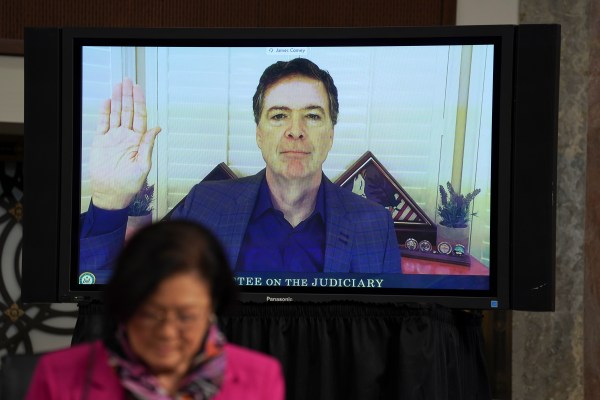
And on Thursday, Halligan filed a barebones indictment against Comey in Alexandria, Virginia. The federal grand jury—which determines probable cause—declined to bring a requested perjury charge but indicted Comey on one count of making a materially false statement and one count of obstruction, both based on his September 2020 testimony before the Senate Judiciary Committee. The indictment is vague, but prosecutors are reportedly focused on 2020 Comey’s testimony, in which he denied authorizing FBI leaks when pressed by Sen. Ted Cruz.
After the indictment was issued, Trump didn’t remain quiet. “JUSTICE IN AMERICA!” the president posted, calling Comey “one of the worst human beings this Country has ever been exposed to,” but that he was “now at the beginning of being held responsible for his crimes against our Nation.”
Comey, in a video posted to his Instagram account on Friday, denied any wrongdoing. “My heart is broken for the Department of Justice,” he said. “I have great confidence in the federal judicial system, and I am innocent, so let’s have a trial, and keep the faith.”
Though there have always been biases and conflicting interests between the occupant of the Oval Office and the Justice Department, the department is supposed to operate independently of the president’s political agenda. Walter Olson, a senior fellow at the Cato Institute’s Robert A. Levy Center for Constitutional Studies, told TMD that in previous administrations, there would be many “people who come in under other administrations, and have somewhat different political philosophies, but [they] saw that as one part of the department’s culture.”
That hasn’t been true with Trump’s DOJ in his second administration. As Olson explained, Bondi has sent a clear message throughout the department: “If you’re not part of our agenda, you shouldn’t be here.”
As Mike Warren wrote in his Dispatch piece last week, the focus extends to who was chosen to lead the department:
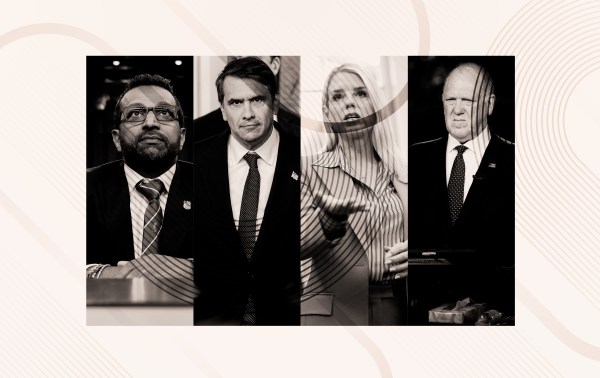
Attorney General Pam Bondi, Deputy Attorney General Todd Blanche, and former Deputy Attorney General Emil Bove (now a federal judge) were all once members of Trump’s personal defense team. Kash Patel, meanwhile, was a prominent member of Trump’s inner ring and a MAGA celebrity in his own right before he was tapped to lead the FBI.
The new tone for a politicized DOJ was set on Trump’s first day back in the White House. He issued sweeping pardons and commutations for most offenders convicted in the January 6, 2021, Capitol riots—including for individuals found to have engaged in violence or taken part in planning chaos. Among those freed were Stewart Rhodes, the leader of the Oath Keepers far-right militia group who was, per the DOJ, “directing and coordinating activities” for his followers inside the Capitol building during the riots and received an 18-year sentence, as well as Enrique Tarrio, the national chairman of the far-right Proud Boys organization, who received a 22-year sentence for acting, according to the federal district judge who oversaw his trial, as “the ultimate leader, the ultimate person who organized” the January 6 attacks.
Later in the first week of Trump’s second term, the DOJ fired more than a dozen federal prosecutors who had worked on special counsel Jack Smith’s criminal investigations into the president, because, as one unnamed DOJ official told Politico, the administration “did not believe these officials could be trusted to faithfully implement the President’s agenda because of their significant role in prosecuting the President.” The department followed that up in July by firing 20 more employees.
DOJ pardon attorney Liz Oyer was fired in March over her decision to deny the restoration of gun rights to Hollywood actor and filmmaker Mel Gibson, after they were suspended following a domestic violence conviction. (Bondi later restored his gun rights.) More recently, on September 23, Bondi fired Will Rosenzweig, a prosecutor in the federal Southern District of Florida, because, as the Miami Herald reported, he had shared negative opinions of Trump on the internet years before assuming his role at the DOJ.
In the administration’s view, this has been an unwinding of the politicization of justice, rather than its acceleration. In a memo that Bondi sent out in February, she announced the formation of the “Weaponization Working Group,” a new DOJ office to examine “abuses of the criminal justice process,” including for both local and federal agents. Ed Martin runs this office—who, as Mike Warren put it, “used his several months as the acting U.S. attorney for the District of Columbia to antagonize universities, medical journals, and even Wikipedia”—and a pardoned January 6 attendee, Jared Wise, was hired for his team.
However, they have shown interesting discretion in their prosecutorial choices. In May, the New York Times reported that the DOJ had opened a criminal investigation into former New York Gov. Andrew Cuomo over allegations that he lied before Congress while testifying about his handling of the COVID-19 pandemic. Meanwhile, after New York City Mayor Eric Adams met with Trump in Mar-a-Lago in January and said that he would cooperate with the administration’s deportation agenda, then-acting Deputy Attorney General Emil Bove directed federal prosecutors to drop the DOJ’s 2024 case against Adams, which had resulted in charges of bribery, campaign finance offenses, and conspiracy. On September 20, MSNBC reported that the DOJ had dropped a case against Trump’s incoming border czar, Tom Homan, who had allegedly been recorded by undercover FBI agents accepting $50,000 in cash in exchange for promises to facilitate federal border security contracts if Trump won reelection.
The Justice Department has also targeted academic institutions for what it says are civil rights violations. The Trump administration in March canceled about $400 million in federal funds to Columbia University, citing “ongoing investigations” into the university had adequately protected Jewish students against antisemitism (Columbia in July agreed to pay $221 million to resolve the matter); and in April, the administration pulled large sums of federal funding from Cornell and Northwestern, a decision made over similar alleged civil rights infractions from the DOJ.
Most notably, when Harvard University refused to comply with the administration’s demands—which included sending hiring and admissions data to the government, shuttering all diversity, equity, and inclusion programs, and reforming several academic departments, including the university’s divinity school—the administration in April moved to pull $2.2 billion in federal grants for the university. While a federal district judge issued an order to unfreeze the funds earlier this month, the Justice Department has appealed that decision.
But Harvard still has First Amendment rights, and, as Olson noted, upon hearing the Trump administration’s demands, “I thought, okay, if you wanted to wave a flag saying ‘we are violating the First Amendment,’ taking a private university and saying we are going to hold you over the fire unless you agree to change the ideological tone of your divinity school is really out there.”
Today’s Must-Read
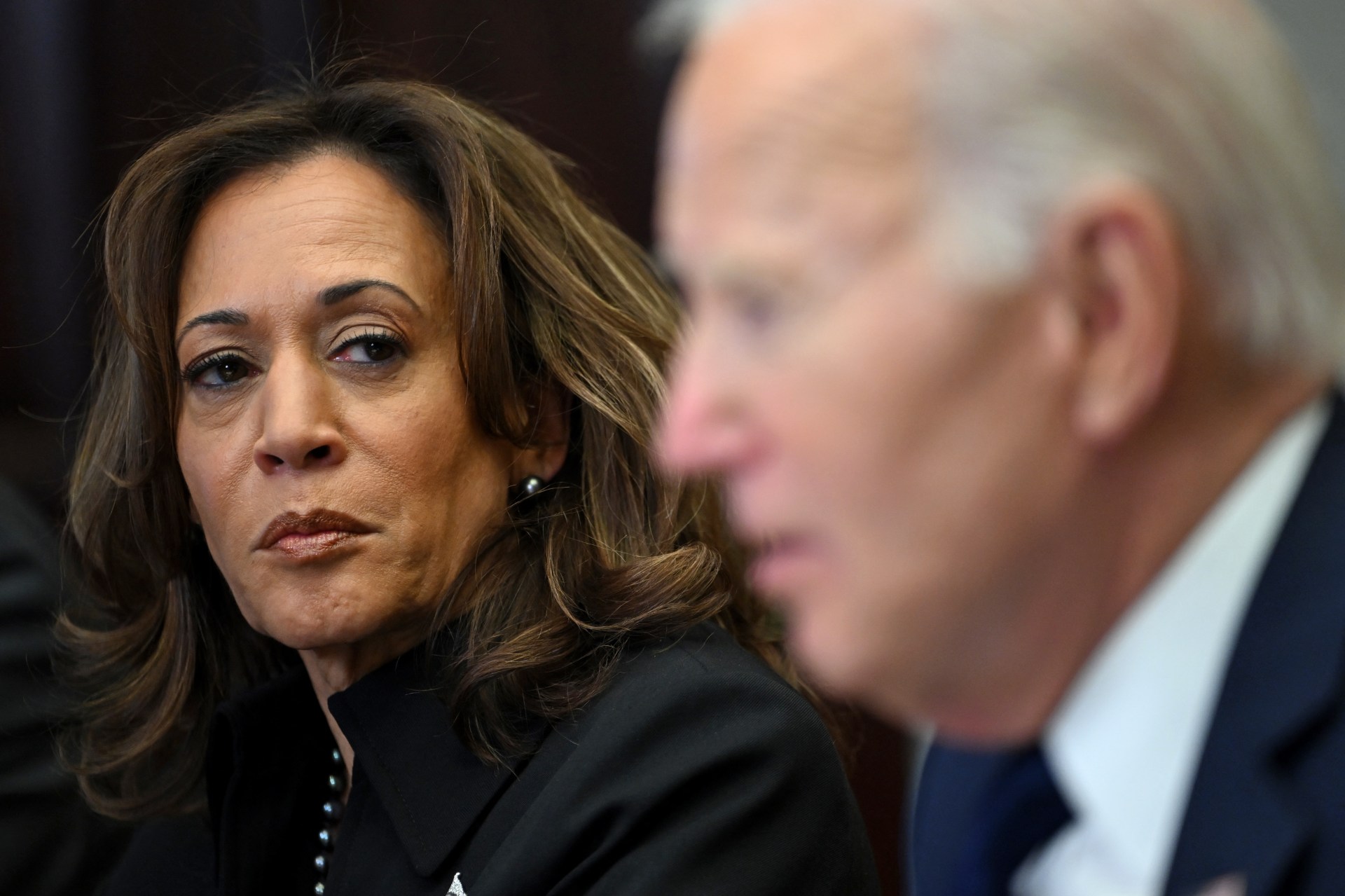
In sports, coaches of losing teams that put up a valiant effort to tighten the score at the end of the game are fond of saying: “We didn’t lose; we just ran out of time.” That is, in effect, the message of Kamala Harris’s book 107 Days, her memoir of the shortest presidential general election campaign in history. But based on Harris’ own recounting of the 2024 campaign, it’s hard for the reader to share the conclusion that lack of time was the primary cause, or even a leading cause, of her defeat.
Toeing the Company Line
The F-Word
A hit dog will holler.

The Wrong Way to Fight Trump’s Tariffs
Democrats like Rebecca Cooke are quick to point out tariffs are hurting farmers—but they refuse to present a real trade policy.
Argentina First? Why Trump Is Betting $20 Billion on Javier Milei.
History indicates an economic bailout plan for the South American country is unlikely to succeed.

A Permission Slip to Be a Person
Women’s natural selves are often seen as defective from the start.
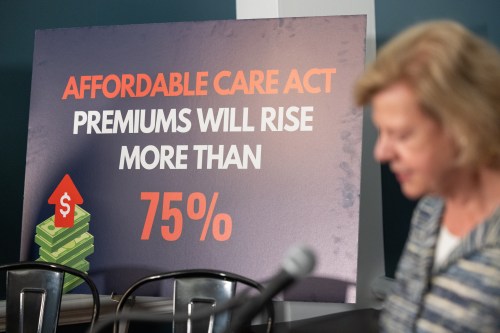
Health Care Subsidies Are a Political Shortcut, Not a Lasting Policy Solution
Congress should focus on lowering the cost of care, not just subsidizing insurance enrollment.

Worth Your Time
Electric cars may be the future, but investing in them has been a risky move for automakers, with high depreciation on luxury models and low sales and margins elsewhere—and that was true before President Donald Trump killed the electric vehicle (EV) tax credit. Ford has responded by building a whole new electric platform and construction technique, which CEO Jim Farley dubs their “Next Model T moment,” but General Motors has instead pivoted hard back to gas vehicles, both in their product planning and lobbying. As Sharon Terlep writes in the Wall Street Journal, “GM has gone from one of the industry’s loudest EV champions to a leading opponent of government emissions rules and fuel-economy standards that for decades fueled the consumer market for cleaner, more fuel-efficient vehicles. Many car companies, faced with softening EV sales and a Trump administration hostile to green-energy initiatives, have called for looser regulations. None has backtracked as quickly and dramatically as GM.”
Presented Without Comment
Reuters: Trump Says U.S. To Impose 100 Percent Tariff on Movies Made Outside the Country
Also Presented Without Comment
The Independent: QAnon Shaman Sues Trump for $40 Trillion and Targets Musk, T-Mobile, and Warner Bros in Rambling Lawsuit
Also Also Presented Without Comment
South China Morning Post: Chinese Woman Admits $7.4 Billion Bitcoin Fraud at U.K. Court
Let Us Know
Have any thoughts or questions about today’s newsletter? Drop us a note in the comments!




Please note that we at The Dispatch hold ourselves, our work, and our commenters to a higher standard than other places on the internet. We welcome comments that foster genuine debate or discussion—including comments critical of us or our work—but responses that include ad hominem attacks on fellow Dispatch members or are intended to stoke fear and anger may be moderated.
With your membership, you only have the ability to comment on The Morning Dispatch articles. Consider upgrading to join the conversation everywhere.