Turn any article into a podcast. Upgrade now to start listening.
Premium Members can share articles with friends & family to bypass the paywall.
Editor’s Note: For the week leading up to Thanksgiving, we’re unlocking The Morning Dispatch for everyone—no paywalls. If you’re a new reader or are on the free list, we hope you enjoy the complete TMD experience. And if you’re a member, thank you for your support. We hope you’ll consider forwarding these next few editions to friends and family you think would value our work.
Happy Tuesday! Namibian politician Adolf Hitler Uunona is expected to win reelection tomorrow, proving that name recognition really is everything in politics.
Quick Hits: Today’s Top Stories
- In separate decisions, a federal district judge on Monday dismissed indictments brought against former FBI Director James Comey and New York Attorney General Letitia James, ruling that Lindsey Halligan—the interim U.S. Attorney for the Eastern District of Virginia—“had no lawful authority to present the indictment[s].” President Donald Trump nominated Halligan to the position in September, but Judge Cameron McGowan Currie ruled that the administration’s authority to temporarily appoint an interim attorney had already expired, and that, by law, district courts have jurisdiction over temporary appointments until the Senate votes to confirm the president’s nominee. Currie dismissed both cases without prejudice, allowing the Justice Department to seek new grand jury indictments against Comey and James. But the statute of limitations on the charges brought against Comey expired at the end of September, which Currie noted in her order.
- The U.S. on Monday officially designated Cartel de los Soles—which officials say participates in illicit markets, including drug trafficking—as a foreign terrorist organization of which Venezuelan President Nicolás Maduro is a part. Secretary of State Marco Rubio first announced the designation on November 16, although the Cartel de los Soles name is used to describe corrupt government officials rather than an organization. In response, Venezuela’s Maduro-led government called the move “ridiculous” and claimed that the criminal network was “non-existent.” Meanwhile, several international airlines paused flights traveling above Venezuela, one day after the Federal Aviation Administration warned pilots to “exercise caution” in the nation’s airspace. Venezuela’s Foreign Ministry also recently shared that Chinese leader Xi Jinping sent Maduro a letter affirming their countries’ friendly relationship and assuring Maduro’s regime of assistance in “safeguarding its sovereignty and national security.” Gen. Dan Caine, chairman of the Joint Chiefs of Staff, traveled to Puerto Rico on Monday and spoke with American military servicemembers currently stationed there.
- Tensions between China and Japan’s new prime minister, Sanae Takaichi, continue to escalate. Yesterday, a spokeswoman for China’s Foreign Ministry said that Japan’s plan to deploy medium-range missiles on an island less than 70 miles from Taiwan would “create regional tension and provoke military confrontation,” and Chinese Foreign Minister Wang Yi warned on Sunday that Takaichi had “crossed a red line” when she said, during parliamentary questions on November 7, that Chinese military intervention in Taiwan would be a “survival-threatening situation” for Japan that would require a response. China has since warned its citizens against travel to Japan, curtailed visa processing and group tours, and suspended imports of Japanese seafood. The Chinese consul general in Osaka also posted on social media that Takaichi should have her “filthy head ... cut off.” Last week, Japanese media reported that Takaichi’s ruling Liberal Democratic Party is considering revising the country’s official principles opposing nuclear weapons. Trump spoke with Chinese leader Xi Jinping yesterday, during which—according to China’s Foreign Ministry—Xi underlined the Chinese Communist Party’s position on Taiwan. After the call, Trump called Takaichi, at his request, to brief her on his conversation with Xi. Trump announced on Truth Social that Xi invited him to Beijing in April for an in-person meeting, and offered China’s leader an opportunity to visit the U.S. later in 2026.
- Israel Defense Forces Chief of Staff Lt. Gen. Eyal Zamir yesterday accused Defense Minister Israel Katz of harming the military’s preparedness by halting promotions for 30 days, including appointments Zamir had already approved. The statement came in response to Katz’s order for the Defense Ministry comptroller to review an external panel’s report on the IDF’s investigation into the failures surrounding Hamas’s October 7, 2023, terror attack—a decision that Zamir called “puzzling,” noting that “[t]he IDF is the only body in the country that thoroughly investigated its own failures and took responsibility for them.” The feud comes amid growing public and legal pressure for an official state inquiry into October 7, with the Israeli cabinet instead voting on November 16 to establish a government-appointed commission to probe October 7. Hebrew media reports that Netanyahu will summon Zamir and Katz for a private meeting to resolve their dispute. On Sunday, Israel’s far-right national security minister, Itamar Ben-Gvir, ordered a police raid on a children’s musical show in East Jerusalem, which authorities claimed was linked to the Palestinian Authority and lacked the necessary permits. The IDF has also strengthened air defenses in expectation of a military response from Hezbollah after Israeli strikes on Sunday killed the terrorist group’s military leader.
- The Supreme Court on Monday did not select for review challenges to a Trump-issued executive order ending birthright citizenship—though the court may take up the case during its conference on December 5. The Supreme Court did not explicitly deny review of the case but instead opted for a “relist,” a common practice that gives the justices more time to make a final determination.
Red Lines

President Donald Trump was feeling optimistic on Monday morning. “Is it really possible that big progress is being made in Peace Talks between Russia and Ukraine???” he wrote on Truth Social. “Don’t believe it until you see it, but something good just may be happening.”
Something is happening, but whether it’s good remains an open question. Since Thursday, U.S., Ukrainian, and European officials have been involved in a flurry of diplomatic activity following the leak of a draft 28-point peace plan for Russia and Ukraine, written by U.S. and Russian negotiators in secret.
The original plan—reportedly written over drinks in Miami by Trump’s son-in-law Jared Kushner, White House Special Envoy for Peace Missions Steve Witkoff, and his Russian counterpart, Kirill Dmitriev—had Trump’s blessing and a Thanksgiving deadline for Ukraine to sign on. It would end the war on terms favorable to Russia: ensuring its reintegration into the global economy, giving it control over occupied territory in Ukraine, and ending any Ukrainian hopes of joining NATO. During a national video address on Friday, President Volodymyr Zelensky said Ukraine faced “one of the most difficult moments in our history”—to choose between losing “dignity” and losing a “key partner.”
But in the days since, U.S. and Ukrainian officials have been working together to significantly modify the deal, with European nations offering their own proposals. It’s the most concrete progress yet made on a deal that might end the war—but many crucial factors, including Russia’s assent, remain very much uncertain.
Typically, The Morning Dispatch’s main story is cut off here, with the full item reserved for paying members. We are unlocking the newsletter this week to give free readers a taste of what they’re missing out on. To get the full version in your inbox every day—and unlock all of our stories, podcasts, and community benefits—join The Dispatch as a paying member.
News of the plan broke on Thursday evening, as Axios reported that U.S. and Russian negotiators—primarily Witkoff, Kushner, and Dmitriev, along with Secretary of State Marco Rubio—had drafted a 28-point peace plan; the full text of which leaked the next day. It called for an immediate ceasefire and for Ukrainian forces to withdraw from the remaining parts of the Donetsk oblast that they still control, ahead of a “de facto” international recognition of Russian control over Crimea, Donetsk, and Luhansk (the latter two are known as the Donbas). Front lines in the regions of Zaporizhzhia and Kherson would also be frozen, with “de facto recognition” of Russian control. Russia would withdraw from the territory it controls outside the five regions.
On top of Ukraine ceding territory:
- NATO and Ukraine would both pledge that Ukraine would never join NATO;
- Ukraine would cap its armed forces at 600,000 troops, below the roughly 880,000 it currently fields (it is unclear whether this number includes reserves);
- NATO forces would not be stationed in Ukraine;
- It would be “expected” that NATO not expand further; and
- Ukraine would commit to holding elections in 100 days.
In return, Russia would also be “expected” not to invade its neighbors and would sign a non-aggression treaty with Ukraine, the U.S., and Europe. It also includes a security guarantee, committing the U.S. and allies to determine “the measures necessary to restore security” in the event of Russian aggression.
Negotiators also envisaged a series of economic deals involving Ukraine, Russia, and the U.S. Previously frozen Russian assets would be used to fund Ukraine’s reconstruction and also a joint U.S.-Russia investment vehicle. The U.S. and Europe would also lift sanctions on Russia in stages—though there were few specifics there.
But it’s unclear whether the leaked proposal represented U.S. aims or was an attempt by Kirill Dmitriev to create facts on the ground. Witkoff—in a since-deleted comment on a social media post of the Axios story, which he seemingly had intended to be a private message—wrote, “He must have got this from K.”
And that wasn’t the end of the confusion. While Trump reportedly approved the plan, sending negotiators to Geneva to discuss the details with a Ukrainian delegation, U.S. senators told reporters Saturday that Rubio had assured them that the U.S. did not author its main provisions. Less than an hour after those comments, Rubio said that the U.S. had authored the plan after all, and a State Department spokesperson dismissed the senators’ statements as “blatantly false.”
The proposal isn’t all bad news for Ukraine, said Lawrence Freedman, emeritus professor of war studies at King’s College London and an author of Comment is Freed, which covers the Ukraine war.
“There are odd aspects of it that will annoy the Russians,” he told TMD of the plan, citing the vagueness of the language surrounding sanctions relief, the proposal to use Russian funds to rebuild Ukraine, and the requirement that the Donbas be demilitarized.
The security guarantee is also “more than they [Ukraine] have been offered in the past,” Freedman noted, as it’s the first time that the U.S. and major European powers have all pledged to protect Ukrainian sovereignty. “I don’t think the Russians will accept this,” he said. “There’s too many things at the moment that are too vague.”
But plans can change. Following hours of meetings in Geneva on Sunday, U.S. and Ukrainian officials released a joint statement describing negotiations as “highly productive” and announcing that an “updated and refined peace framework” had been agreed upon.
The revised framework includes 19 points, according to individuals who were present at the negotiations, but it refrains from addressing NATO relations and territorial questions. Those were left undecided, to be dealt with by Trump and Zelensky at a later date—but Zelensky said yesterday that the question of recognizing territory occupied by Russia was the “main problem” in any peace deal, and there is currently no meeting scheduled between Zelensky and Trump.
European leaders are also insistent that they have a say in any final peace deal. On Sunday, the “E3” of Britain, France, and Germany announced their own counterproposal, which builds on the U.S.-proposed framework. It scraps the pledge not to expand NATO, calls for a Ukrainian army cap of 800,000, says that Ukraine can join NATO with “consensus” from members, and says NATO troops can deploy to Ukraine, just not “permanently.” The European consortium also said that any territorial swaps would be negotiated after a ceasefire along the line of conflict, rather than decided from the outset.
“We don’t really care about the Europeans,” one White House official told a reporter last week. “It’s about Ukraine accepting.” But Europe may have some leverage. Collectively, it is now the largest supplier of support to Ukraine, as the U.S. has not passed a new military aid package in Trump’s second term, and most frozen Russian assets are held in Europe.
“They might have a say, maybe they might get some corrections made,” Jim Townsend, a senior fellow at the Center for a New American Security and former deputy assistant secretary of defense for European and NATO policy, told TMD. “But vetoing something? They don’t have that leverage.”
For their part, Russian leaders have been fairly circumspect about the dueling plans. On Sunday, Putin told Turkish President Recep Tayyip Erdoğan that the first draft could be the basis for a “final peaceful settlement,” and on Monday, a top Kremlin aide said the European plan was “unconstructive,” while adding that Russia would be open to “many, but not all” of the points in the U.S. plan. Reuters reported this morning that U.S. Army Secretary Dan Driscoll talked with Russian officials in the United Arab Emirates, with more meetings expected today. Another Kremlin spokesman, Dmitry Peskov, said that in the meantime, “We will wait.”
But as Russia waits, the war continues.

Last night, Russian forces once again fired drones and missiles on Kyiv, hitting residential buildings and killing at least six; yesterday, Russian troops continued their advance on the embattled Ukrainian city of Pokrovsk. On Saturday, Driscoll told a group of European diplomats that “the honest U.S. military assessment is that Ukraine is in a very bad position and now is the best time for peace.”
But the situation on the battlefield is more ambiguous, as Rob Lee—a military analyst who regularly tours the front lines—told TMD. Ukraine is increasingly struggling to field full-strength combat formations amid a growing manpower shortage, but Russia is also suffering heavy casualties. The front lines are functionally static, and even when one side punches through, exploiting that opening has proved nearly impossible.
As Robert Hamilton, a military expert and senior fellow at the Delphi Global Research Center, told TMD, “You can’t put a tank battalion or a mechanized infantry battalion out in the open because it’s going to be killed by drones.” The only option is to move forward slowly, in small groups.
Ukraine’s government is also facing political challenges. Two members of Zelensky's government resigned due to their suspected involvement in a $100 million scheme to siphon money from the state energy firm, and Andrii Yermak—Zelensky’s chief of staff and one of the lead negotiators in Geneva—has been accused of involvement as well. Independent Ukrainian corruption investigators have not named Yermak as a suspect, but an opposition lawmaker accused him of being one of the anonymous conspirators recorded as part of the investigation.
“Citizens demand accountability from President Zelensky, and they want him to be much more decisive in cleaning up his inner circle,” Oleksandra Keudel, a professor at the Kyiv School of Economics, told TMD. “But this wish is not linked to a desire to support or not support President Trump’s proposal.”A large majority of Ukrainians now favor a negotiated end to the war, rather than fighting until victory. But a deal without strong security guarantees remains very unpopular. “People don’t really know what exactly is a good security guarantee, but [they know] it has to be there somehow,” said Keudel.
Today’s Must-Read


If you find yourself nodding along when the subject of antitrust cases comes up, but aren’t sure exactly what they’re really about, don’t worry. The people enforcing the rules aren’t sure either. Jessica Melugin, director of the Center for Technology & Innovation at the Competitive Enterprise Institute, explains that even 135 years after the Sherman Antitrust Act, courts and regulators still can’t agree on what actually violates antitrust rules—or whether the goal is to help consumers, protect small businesses, or achieve political objectives. From prosecuting grocery chains for offering lower prices in the 1940s to today’s battles over Big Tech, the history of antitrust enforcement is a cautionary tale of the confusion that results from muddied government regulation.
Toeing the Company Line
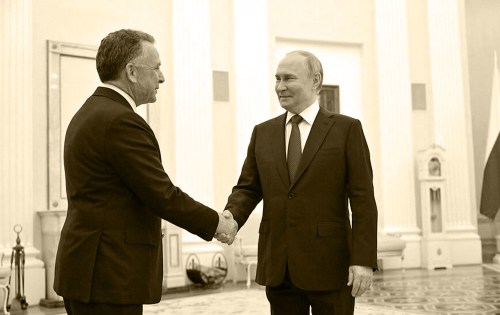
Too Many Cooks
Trying to make sense of the Ukraine peace plan mess.

Against Nostalgia
Postliberals’ wishcasting is really just their misremembering.

The Battle for the Minds of Men
How psychology fails half the population—and how it might be changing.
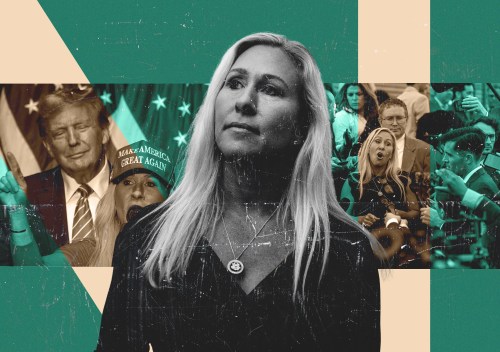
Flash in the Pan or the Future of MAGA?
Marjorie Taylor Greene will leave Congress soon. What's next?

Your Children Are Too Online | Interview: Dr. Jean Twenge
How parents can stop technology from controlling their children’s lives.

In Other News
Today in America:
- The Defense Department is investigating Democratic Sen. Mark Kelly of Arizona, a retired Navy captain, for “serious allegations of misconduct” after he appeared in a video with five fellow Democratic lawmakers urging military service members against carrying out illegal orders.
- The Homeland Security Department removed temporary protected status from Burma nationals, determining that the ruling military junta has made “notable progress,” including plans to hold an upcoming election.
- Former Sen. Doug Jones of Alabama, a Democrat, announced a campaign for the state’s 2026 gubernatorial race. Republican Sen. Tommy Tuberville, who unseated Jones in 2020, is also running.
- Republican Rep. Don Bacon of Nebraska says he was “so angry” about the Trump administration’s 28-point framework for a Russia-Ukraine deal that he considered resigning from office.
- The White House shared a plan to issue a two-year extension for federal subsidies under the Affordable Care Act. It has yet to release a final proposal.
- Viola Fletcher, the oldest survivor of the Tulsa Race Massacre, has died at 111 years old.
Around the World:
- The leader of the Sudanese Armed Forces, Gen. Abdel-Fattah Burhan, rejected a U.S.-proposed ceasefire to pause fighting with the paramilitary Rapid Support Forces, stating that terms offered were “the worst yet.”
- Gunmen attacked a village in the western Congo, killing at least 14 people, including three children younger than 5 years old.
- Voters in the Serb-run half of Bosnia and Herzegovina, the Republika Srpska, elected Science and Higher Education Minister Sinisa Karan president. Karan is a close ally of Bosnian Serb separatist former President Milorad Dodik.
- Malaysia’s Cabinet approved a measure to ban those under 16 years old from having a social media account. The government said it was examining options for enforcing the measure and did not say when the ban would take effect.
- Belgium’s ruling coalition came to an agreement on a new budget proposal, preventing the collapse of Prime Minister Bart De Wever’s government.
- Afghanistan's Taliban government accused Pakistan of resuming attacks on the country, claiming that overnight airstrikes killed 10 civilians, nine of whom they say were children.
On the Money:
- Americans’ electric utility bills have increased an average of 11 percent since January, according to the National Energy Assistance Directors Association.
- Commerce Secretary Howard Lutnick said Trump is considering allowing China to purchase advanced AI chips from Nvidia.
- Anthropic released Opus 4.5, a new advanced model for its large-language model, Claude, which is more capable of completing complex and coding tasks while being less expensive than previous Opus models.
- Novo Nordisk shares fell more than 10 percent on Monday, to the lowest level in four years, after a trial showed semaglutide—the active ingredient in its weight loss drugs—failed to slow the progression of Alzheimer’s disease.
- Japan’s Financial Services Agency required cryptocurrency exchanges operating the country’s financial system to set aside liability reserves.
- The UK government awarded MBDA UK a $414 million contract to make DragonFire, the British navy’s first operational laser weapon system. In trials, it was able to destroy drones traveling more than 400 miles an hour.
Worth Your Time:
- “Why Is Robert F. Kennedy Jr. So Convinced He’s Right?” (Atlantic)
- Veronika Melkozerova reports on how Russia recruits cash-strapped young Ukrainians to spy on their country’s military. (Politico)
- Chris Dalla Riva explores how intellectual property laws are stagnating cultural development. (Slow Boring)
- Kevin Hawickhorst reflects on 20th-century American government administrator David E. Lilienthal: “The First Prophet of Abundance.” (Asterisk Magazine)
- Sruthi Pinnamaneni visits the data centers running AI—and the rest of the internet—for a two-part podcast. (Search Engine)
Presented Without Comment
Jewish Insider: New Lawsuit Accuses Binance of ‘Knowingly’ Enabling Oct. 7 Terror Attacks
According to the complaint, Binance, the world’s largest cryptocurrency exchange, “deliberately” failed “to monitor inbound funds” to such terror groups as Hamas, Hezbollah, Palestinian Islamic Jihad and the Islamic Revolutionary Guard Corps, ensuring “that terrorists and other criminals could deposit and shuffle enormous sums on the exchange with impunity.”
…
In November 2023, [Binance Founder Changpeng] Zhao pleaded guilty to money laundering charges and agreed to step down from his executive role. He served four months in federal prison and was pardoned last month by President Donald Trump. Binance itself also pleaded guilty to federal charges and paid over $4 billion in fines.
Also Presented Without Comment
Fox News: ‘ShamWow’ Guy Files to Run for Congress in Texas as Republican Candidate
Also Also Presented Without Comment
Associated Press: Copy of ‘Hillbilly Elegy’ Used to Sneak Drugs Into Ohio Prison
Let Us Know
Have any thoughts or questions about today’s newsletter? Drop us a note in the comments or by emailing us at tmd.questions@thedispatch.com. We read every submission, and your message could be featured in an upcoming “Behind the Scenes” segment.
Have any thoughts or questions about today’s newsletter? Become a member to unlock commenting privileges and access to a members-only email address. We read every submission, and answer questions in the following edition of TMD.




Please note that we at The Dispatch hold ourselves, our work, and our commenters to a higher standard than other places on the internet. We welcome comments that foster genuine debate or discussion—including comments critical of us or our work—but responses that include ad hominem attacks on fellow Dispatch members or are intended to stoke fear and anger may be moderated.
With your membership, you only have the ability to comment on The Morning Dispatch articles. Consider upgrading to join the conversation everywhere.