Turn any article into a podcast. Upgrade now to start listening.
Premium Members can share articles with friends & family to bypass the paywall.
You’re reading The Morning Dispatch, our flagship daily newsletter explaining all the news you need to know today in fewer than 10 minutes. To unlock the full version, become a Dispatch member today. This month you can try 30 days of membership for $1.
Happy Wednesday! Last week, the FBI’s Atlanta office seized nearly 1,600 pounds of methamphetamine hidden in shipments of blackberries. So now you know: Blackberries are a great source of fiber, antioxidants, and highly addictive stimulants.
Quick Hits: Today’s Top Stories
- White House special envoy Steve Witkoff and Russian leader Vladimir Putin met in Moscow on Tuesday to discuss the latest round of peace plan negotiations between Ukraine and Russia. President Donald Trump’s son-in-law and first administration foreign policy adviser Jared Kushner was also present. After the five-hour meeting, Putin senior aide Yuri Ushakov said that peace talks were “not further” away from completion than before, but that “there’s still a lot of work to be done.” He added that the U.S. and Russia would stay in contact. Later in the day, Putin said, “We are not planning to go to war with Europe, but if Europe wants to and starts, we are ready right now.”European Union foreign affairs and security policy chief Kaja Kallas expressed concern ahead of the meeting that discussions between the U.S. and Russia would increase pressure on Ukraine that should instead be placed on Russia. On his first diplomatic visit to Ireland, Ukrainian President Volodymyr Zelensky said yesterday that his country could not accept any deal that might enable Russia to “come back with a third invasion.” Russia claimed on Monday to havecaptured a city in Ukraine’s eastern Donbas region, Pokrovsk, which the Ukrainian military disputed. Overnight, Ukrainian drones struck two Russian oil depots in the Tambov and Voronezh regions.
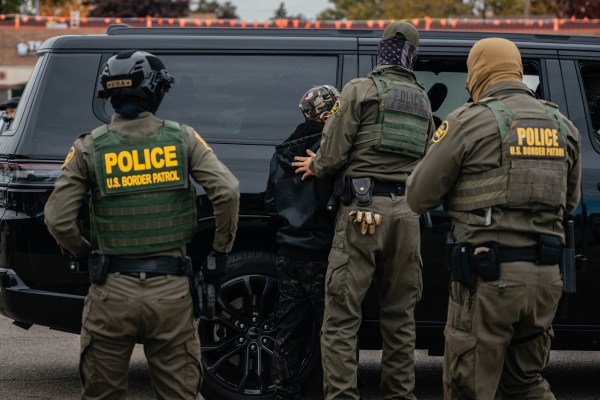
- The New York Times reported Tuesday that the Trump administration plans to launch an immigration enforcement operation specifically targeting Somali-national illegal immigrants in Minneapolis and Saint Paul, Minnesota. The report came in the aftermath of federal prosecutorsconvicting 59 people among the state’s Somali diaspora with defrauding the state of more than $1 billion. On Monday, Treasury Secretary Scott Bessent said his department was investigating claims that al-Shabaab, an al-Qaeda affiliate based in Somalia, received state tax dollars under the fraud scheme. U.S. House of Representatives Oversight Committee Chair James Comer of Kentucky told the New York Post that he would “conduct a thorough investigation into [Democratic Minnesota Gov. Tim] Walz’s failure to safeguard taxpayer dollars.” And during a Tuesday Cabinet meeting, Trump said Somalia “stinks,” and when immigrants “come from hell, and they complain and do nothing but bitch, we don’t want them in our country.”
- The intergovernmental Organization for Economic Cooperation and Development released a new forecast Tuesday on the U.S. economy, upgrading its estimate of total economic growth to 2 percent, up from 1.6 percent in June. It’s still a considerable drop from the U.S. economic growth in 2024 of 2.8 percent. The outlook for global economic growth also improved, up from a projected 2.9 percent in June to 3.2 percent, just shy of the global 3.3 percent in 2024. New data from the American Automobile Association show that, as of Monday, gas prices fell to a nationwide average of about $3 per gallon—the lowest mark since 2021—and on Tuesday, stock indices returned to steady gains after a choppy November that saw major stocks affected by concerns about an AI bubble. Through November, Nvidia lost 8 percent of its value, Meta stock lost 13 percent, and Oracle fell by almost 30 percent. Google was the only exception, up 20 percent due to positive reception of its new Gemini 3 model, strong earnings, and reports of a multibillion-dollar chip deal with Meta.
- During a Cabinet meeting yesterday, Defense Secretary Pete Hegseth defended the September military strike on an alleged drug smuggling boat—in which the U.S. military fired on survivors clinging to the wreckage—after a Friday report in the Washington Post claimed he had ordered military personnel to “kill everybody.” Hegseth defended the lethal strikes as coming in the “fog of war,” said he “didn’t stick around to see” the second strikes, and put responsibility on Adm. Frank M. Bradley, the commander of the operation. (Read more about the legality of the strikein yesterday’s TMD). During the Tuesday Cabinet meeting, Trump said the U.S. would begin conducting strikes on drug smugglers on land in Latin America “very soon.” On Monday, unnamed U.S. officials told Reuters that Trump held a meeting in the Oval Office with senior advisers to discuss the government’s approach toward the Venezuelan regime.
- Democrats on the House Judiciary Committee launched an investigation on Monday into FBI Director Kash Patel’s use of the agency’s Gulfstream passenger jet following reports that he used the plane to visit his girlfriend and for other personal trips. One of those flights was to a Penn State wrestling match, where his girlfriend—right-wing activist and singer Alexis Wilkins—was performing the national anthem. The committee’s ranking member, Democratic Rep. Jamie Raskin of Maryland, along with Democratic Rep. Sydney Kamlager-Dove of California, wrote in a letter to Patel, “After attending her performance, you used the government’s jet to fly with her home to Nashville the following day. Your ‘date night’ had no apparent connections to your official duties.”
Locked Out

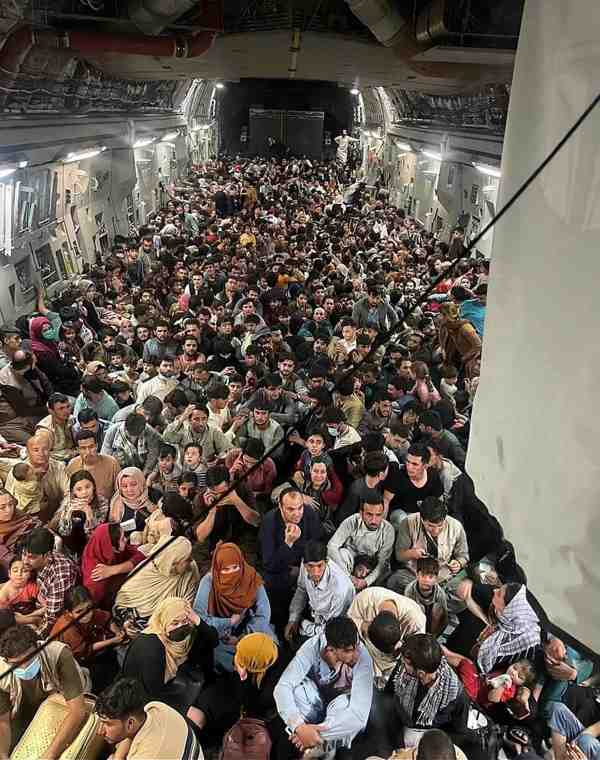
Until the August 2021 fall of Kabul, Rahmanullah Lakanwal served in a CIA-trained special forces unit for the Afghan government. He reportedly averaged three operations per week and served as a door breacher within the elite counterterrorist team known as the “Zero Unit” squads. As his country fell to the Taliban, the U.S. called upon Lakanwal’s unit to clear runways at Kabul’s international airport in August 2021 in preparation for what would become the largest non-combatant evacuation in history.
On September 8, 2021, Lakanwal paroled into the U.S. through the Biden administration’s Operation Allies Welcome program—which sought to expedite the entry of Afghan nationals who had worked with the U.S. into the country—and Lakanwal applied for asylum in 2024. It was granted earlier this year, under the Trump administration.
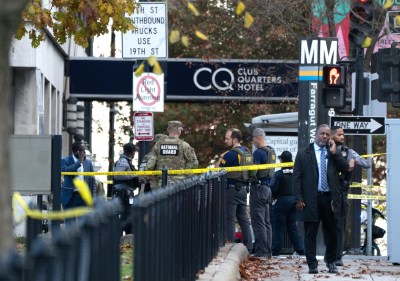
More than four years after arriving in the U.S., Lakanwal allegedly drove from his home in Washington state to Washington, D.C., and opened fire on U.S. National Guard members, killing one and leaving another in serious condition. A motive for the shooting remains unclear. A caseworker who worked with Lakanwal through a translator wrote in a January 2024 email that he had “not been functional as a person, father and provider since March of last year [2023].” A former Afghan commando said Lakanwal was disturbed in 2024 by the death of a close friend, a fellow Afghan commander who had been denied U.S. asylum.
As investigators try to piece together a motive, the November 26 attack has changed the future of prospective Afghan migrants. The Trump administration has moved ahead with several immigration and asylum policy changes, including a pause on all asylum decisions and a suspension of visa issuance for Afghan nationals. But whether such changes are beneficial or would have prevented the attack remains uncertain.
You are receiving the free, truncated version of The Morning Dispatch. To read the full newsletter—and unlock all of our stories, podcasts, and community benefits—join The Dispatch as a paying member. This month you can try 30 days of membership for $1.

“We must take all necessary measures to ensure the removal of any alien from any country who does not belong here or add benefit to our country,” President Donald Trump said hours after the attack. “If they can’t love our country, we don’t want them.”
U.S. Citizenship and Immigration Services (USCIS)—the Homeland Security Department agency that administers immigration processes—announced the night of the shooting it would immediately pause processing for all immigration applications submitted by Afghan nationals, “pending further review of security and vetting protocols,” and, a day later, that there would be “additional national security measures” for vetting the identity and background of applicants from 19 countries labeled as “high-risk” under a June 4 proclamation by the administration. In a separate announcement, USCIS Director Joseph Edlow further stated that Trump had directed him to conduct a “full scale, rigorous reexamination” of all green card recipients from those 19 countries “of concern.”
By Friday of last week Secretary of State Marco Rubio directed the State Department to pause issuing visas for all Afghan nationals. Edlow said USCIS would halt “all asylum decisions until we can ensure that every alien is vetted and screened to the maximum degree possible.” And Trump vowed on Truth Social to “permanently pause migration from all Third World Countries to allow the U.S. system to fully recover.”
He also threatened to “denaturalize migrants who undermine domestic tranquility, and deport any Foreign National who is a public charge, security risk, or non-compatible with Western Civilization.” He added, “Only REVERSE MIGRATION can fully cure this situation.”
In Trump’s June 4 proclamation, the White House justified its decision to restrict travel from countries, including Taliban-governed Afghanistan, by noting that they “lack a competent or central authority for issuing passports and civil documents, among other concerns,” preventing the U.S. government from conducting proper vetting. Lakanwal’s official documents list his age as 29, which an unnamed U.S. intelligence official told the Washington Post is likely inaccurate. But David Bier, director of immigration studies at the Cato Institute, argued that applying restrictions to applicants based on their country of origin’s bookkeeping ability is an unnecessary extra step. “If there’s no information about the person, then they’re not going to be approved for a visa,” Bier told TMD. “That’s how the system operates.” Instead, he explained, “You just continue to evaluate each applicant, and if they don’t have information proving their eligibility, then they’re ineligible.”
On Thursday, DHS Assistant Secretary Tricia McLaughlin announced the agency plans to review every asylum application approved under the Biden administration, which she claimed “failed to vet these applicants on a massive scale.” On Saturday, an ICE official said agents there would be ensuring Afghans admitted to the country had been “properly vetted” and that they would be now prioritizing the 1,860 Afghan nationals who had been given final deportation orders by an immigration judge but were not yet detained.
But there is no glaring hole in the initial U.S. vetting process. As immigration policy analyst and Dispatch contributor Gil Guerra noted in a Tuesday piece:
The DHS’s IDENT system serves as the primary repository of biometric data, which includes fingerprints, photographs, iris scans, and facial images. IDENT alone holds more than 260 million unique identities and processes more than 350,000 daily transactions. The DOD’s ABIS (Automated Biometric Identification System) contains approximately 2.5 million records specifically from Afghanistan, including information about where, when, and why individuals were collected during combat operations. ABIS is especially crucial because it collects information about individuals ranging from detainees to people applying to work on U.S. military bases to recipients of microloans.
According to John Sandweg—the former acting director of ICE and current partner at Nixon Peabody, where he leads the law firm’s cross-border risks team—officials are checking that biometric information “across a wide array of U.S. databases from the intelligence community, the Department of Defense, law enforcement, or from your international partners.”
“The problem with all of this if the person did not have any terroristic inclinations or memberships or was not a member of any [terror] organization at the time of his admission, even if all the vetting was done properly and you checked all the various databases, you’re not going to find anything,” Sandweg told TMD.
Operation Allies Welcome did have vetting protocols—including biometric collection, such as fingerprints, facial recognition technology, and eye scanners—and the CIA would have vetted Lakanwal previously in Afghanistan. But such vetting procedures can’t weed out individuals who become radicalized after entering the country.
So, the government needs to “make sure that there’s recurrent vetting,” Sandweg said, noting that “DHS has made a lot of strides in this,” explaining that the federal government, local law enforcement, foreign government, and other entities continually update information in a shared database.
But the Trump administration’s immediate response doesn’t take into account those facts.
Daniel Di Martino, a Manhattan Institute fellow whose research focuses on immigration, told TMD that USCIS asylum officers are “still scheduling interviews” with those seeking affirmative asylum status but “they’re just not making decisions.” That applies for denials too, he added, so “you’re just delaying the deportation” of applicants who would otherwise be denied and currently residing in the U.S. Defensive asylum is sought in immigration court by people already in removal proceedings and facing deportation, whereas affirmative asylum is filed preemptively.
“There’s not a compelling security argument for pausing all of their cases,” Bier said. “It’s not as if this results in them being detained or somehow being eliminated as a threat.”
Hopeful Afghan migrants, who were on the verge of coming to America through asylum and other processes, will likely face setbacks as a result of the administration’s updated policy. Robyn Barnard, the senior director of refugee advocacy at the Human Rights First nonprofit, told TMD, “Afghans who’ve been waiting years abroad to be reunited with family here have had their visas torn up and flights canceled.”
Today’s Must-Read
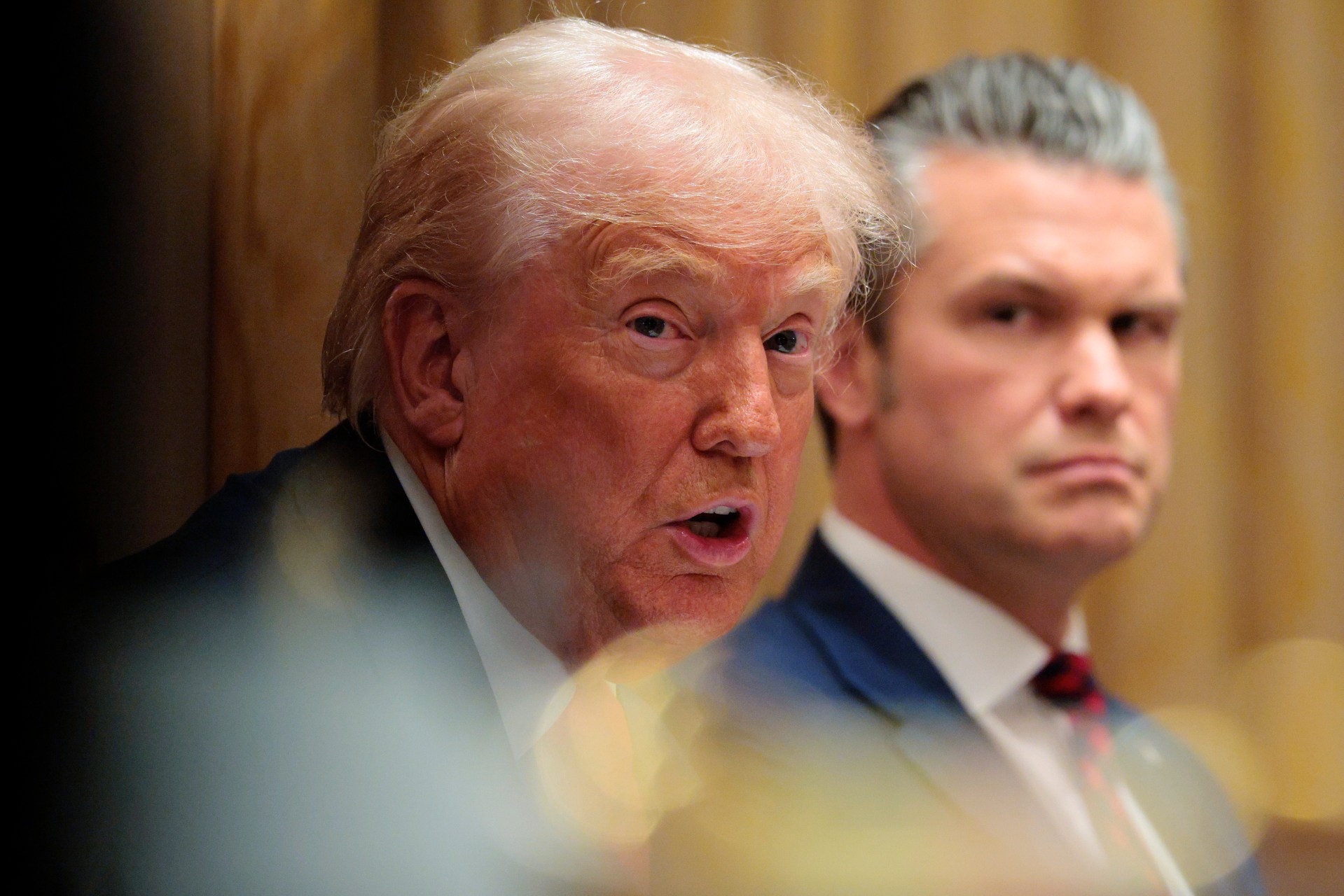
Donald Trump once joked that he could simply murder strangers in public and pay no political price from his supporters. He has apparently decided to test that proposition on the seas rather than on New York City’s Fifth Avenue. Kevin D. Williamson argues that the administration’s campaign in the Caribbean should draw our attention to the president’s pardon powers—and perhaps transform the president’s unilateral pardon power into something less corrupting.
Toeing the Company Line

The Fall Guy
The ‘double tap’ strike is Trumpism in full.

Who Do Hoosiers Choose?
Indiana legislators face a choice between national party loyalty and local representation.

Saying Something Is ‘Legal’ Doesn’t Make It So
Pete Hegseth is dissembling in the face of reports he might have ordered a war crime.

The U.S. at War | Interview: Aaron MacLean
What factions influence Trump's foreign policy?

The Right’s Intellectual Thought Crisis | Roundtable
The self-selecting elite's brain drain.

In Other News
Today in America:
- Republican Matt Van Epps won a Tuesday special election in Tennessee’s 7th Congressional District, defeating progressive Democrat Aftyn Behn by nearly 9 points and preserving the GOP’s margin in the House of Representatives.
- Tech billionaire Michael Dell and his wife pledged $6.25 billion to fund investment accounts for 25 million American children.
- Democratic House Minority Leader Hakeem Jeffries downplayed speculation that congressional Democrats would bring impeachment proceedings against Defense Secretary Pete Hegseth.
- The White House provided more details about Donald Trump’s October MRI scan, stating his abdomen and cardiovascular system underwent “advanced imaging” out of “preventative” precautionary measures.
- Members of the Advisory Committee on Immunization Practices—all appointed by Health Secretary Robert F. Kennedy Jr.—will meet Thursday and Friday to vote on prospective changes to the childhood immunization schedule.
Around the World:
- India made public a government order passed last week requiring smartphone manufacturers to include a new, state-administered cyber safety app on all devices.
- The electoral commission of Guinea-Bissau announced that it could not verify the results of the country’s November 23 presidential elections, because they were stolen by armed militants three days later.
- Honduras’ election commission announced a “technical tie” between the countries’ top two candidates in its November 30 presidential election.
- The Bulgarian government’s right-of-center majority coalition withdrew a budget proposal that had prompted the country’s largest protests in more than a decade.
- Two former police officers during Apartheid-era South Africa were found guilty of murder in the 1987 death of student activist Caiphus Nyoka. A third former police officer also on trial was acquitted.
- German Interior Minister Alexander Dobrindt announced that the government would launch a new counter-drone unit to monitor suspicious objects flying above military zones and critical infrastructure.
On the Money:
- Trump said he would announce a nominee to replace Federal Reserve Chairman Jerome Powell in early 2026.
- The Prada Group closed a $1.375 billion cash purchase of the fashion company’s former rival, Versace.
- New York-based prediction market Kalshi raised $1 billion in a new funding round on Tuesday at an $11 billion valuation. It also announced a partnership with CNN.
- Japan’s bond market experienced a selloff on Tuesday, with the nation’s 10-year and 30-year yields reaching record-breaking highs after the head of the Bank of Japan said Monday that the central bank would weigh the “pros and cons” of raising interest rates at its next meeting.
- Taiwanese prosecutors indicted the Japanese semiconductor company Tokyo Electron for allegedly failing to prevent employees from leaking company secrets of a partner firm, Taiwan Semiconductor Manufacturing Co.
- A crystal and diamond Fabergé egg, made for Russia’s royal family, sold at Christie’s London auction house on Tuesday for $30.2 million.
Worth Your Time:
- “Could Weight Loss Drugs Turn Fat Cats Into Svelte Ozempets?” (New York Times)
- Erin McCormick and Verónica García de León on how an industrial boom in Monterrey, Mexico, is harming air quality. (The Guardian)
- Manuel G. Pascual explores how the same 3D modeling systems used in Pixar movies have now become critical in military drone navigation. (El Pais)
- Masud Khan considers whether increasing our AI use will hurt our ability to think for ourselves. (The Daily Star)
- Yoni Gelernter explains the Israel Defense Force’s controversial Hannibal Directive and uses it to argue that contemporary Israel has a “destructive wish for revenge followed by suicide” that drives both ever-greater violence against Palestinians and the state’s own self-destruction. (The Drift)
- New York Times columnist Ross Douthat speaks with the hosts of Popcast on whether a famous celebrity can “be conservative in Trump’s America?” (New York Times)
Presented Without Comment
Bloomberg: China Adds Tax to Condoms as It Works to Boost Birth Rates
Also Presented Without Comment
Associated Press: New Zealand Man Accused of Eating Fabergé Pendant Inspired by Bond Movie As Police Wait for Evidence
Also Also Presented Without Comment
The Local France: France Wrestles Back Pâté En Croûte Crown From Japan
Let Us Know
Have any thoughts or questions about today’s newsletter? Drop us a note in the comments or by emailing us at tmd.questions@thedispatch.com. We read every submission, and your message could be featured in an upcoming “Behind the Scenes” segment.
Have any thoughts or questions about today’s newsletter? Become a member to unlock commenting privileges and access to a members-only email address. We read every submission, and answer questions in the following edition of TMD.





Please note that we at The Dispatch hold ourselves, our work, and our commenters to a higher standard than other places on the internet. We welcome comments that foster genuine debate or discussion—including comments critical of us or our work—but responses that include ad hominem attacks on fellow Dispatch members or are intended to stoke fear and anger may be moderated.
With your membership, you only have the ability to comment on The Morning Dispatch articles. Consider upgrading to join the conversation everywhere.