Turn any article into a podcast. Upgrade now to start listening.
Premium Members can share articles with friends & family to bypass the paywall.
We are thrilled to launch our Dispatch Junto program, giving dedicated Dispatch members across the country (and the world!) an opportunity to organize regular meetups with fellow readers and listeners in their communities. We’ll help promote the events and convene the group—and if your gatherings grow large enough, your city will jump to the front of the line as we plan our next regional event or live podcast taping.
You’re reading The Morning Dispatch, our flagship daily newsletter explaining all the news you need to know today in fewer than 10 minutes. To unlock the full version, become a Dispatch member today—try us for 30 days for just $1.
Happy Thursday! Over the weekend, a raccoon broke into a liquor store in Ashland, smashed several bourbon bottles, and then passed out beside a toilet. “After a few hours of sleep and zero signs of injury—other than maybe a hangover and poor life choices—he was safely released back to the wild,” Hanover County Animal Protection said in a Facebook post. College students everywhere can relate.
Quick Hits: Today’s Top Stories
- News outlets reported yesterday that a Defense Department inspector general’s report, set to be released today, found that Defense Secretary Pete Hegseth’s decision to use the messaging app Signal to communicate sensitive military information in March endangered U.S. troops and jeopardized the mission. Hegseth reportedly said in a written statement to the Pentagon watchdog that he had the authority to declassify information at his discretion and that he did not believe the information he shared could harm the operation. Unnamed officials told Axios that a copy of the report has already been made available for members of the Senate Armed Services Committee. Meanwhile, a separate unnamed U.S. official told The Hill on Wednesday that the first U.S. military operation targeting a suspected drug boat in the Caribbean, carried out on September 2 involved four total strikes. The second strike killed two initial survivors, as the Washington Post previously reported, while the two subsequent strikes were reportedly intended to destroy the vessel. The Associated Press reported on Wednesday that the Defense Department knew there were two survivors before the second strike was ordered. Adm. Frank M. Bradley will brief members of Congress on the strike today, during a closed session. The Wall Street Journal reported that he is expected to say that he and his legal adviser concluded the two survivors were attempting to continue their drug running, making them legitimate targets.
- New court documents filed Tuesday allege that the 29-year-old suspect in last week’s shooting of two National Guard members in Washington, D.C., Rahmanullah Lakanwal, allegedly shouted “Allahu Akbar” while firing his gun in the assault. The detail came from a law enforcement officer who witnessed the attack and later subdued Lakanwal when he attempted to reload his firearm, according to a copy of the document reviewed by Fox News. On Tuesday Lakanwal made his first court appearance remotely from a hospital bed, entering a plea of not guilty to the charges he faces, which include first-degree murder. On Wednesday, the foreign minister for Afghanistan’s Taliban-run government, Amir Khan Muttaqi, described the shooting as an “individual criminal act,” stating that there was no involvement from the Afghan people or government.
- Israeli officials identified the body returned by Hamas terrorists yesterday as that of Sudthisak Rinthalak, a 43-year-old Thai agricultural worker, who came to Israel to financially support his family. He was murdered on October 7, 2023, and his body taken by Palestinian Islamic Jihad. Only one hostage body remains in Gaza, that of police officer Master Sgt. Ran Gvili. Yesterday, Israel Defense Forces said that Palestinian terrorists attacked Israeli troops stationed in the southern Gaza city of Rafah, injuring five soldiers. In response, Israel launched an airstrike targeting a Hamas terrorist operative in southern Gaza. Israeli officials also announced that they would open the Rafah border crossing for Palestinians seeking to leave the Gaza Strip for Egypt, which Israeli officials said would function similarly to an earlier program in January. Also, for the first time, yesterday Israel and Lebanon both sent representatives to attend a U.S.-led round of cease-fire talks to quell attacks between Israel and the Lebanon-based terrorist group Hezbollah. Lebanese Prime Minister Nawaf Salam said Wednesday that, while no peace deal is imminent, prospective economic ties with Israel could develop from normalized relations between the two countries, which “will follow peace.”
- Kremlin aide Yuri Ushakov claimed on Wednesday that battlefield gains by Russia against Ukraine have given the Kremlin an advantage in peace negotiations and called for Ukraine and European allied countries to adopt a “more balanced attitude and perception of what is going on.” On Tuesday, Russian leader Vladimir Putin said he was “ready right now” for war with Europe should the situation arise, a statement that U.K. Prime Minister Keir Starmer denounced yesterday as “dangerous.” He also reiterated Europe’s commitment to Ukraine, and said the North Atlantic Treaty Organization (NATO) is “ready to respond to any threats with unity and strength.” Meanwhile, Belgium rejected a plan proposed by European Commission President Ursula von der Leyen to use frozen Russian assets to fund contributions for Ukraine over the next two years—covering two-thirds of the country’s financial and military needs in that time. Belgium Foreign Minister Maxime Prévot said the proposal amounted to “theft” and was too “risky.” Ukrainian President Volodymyr Zelensky said that Rustem Umerov, a senior Ukrainian negotiator, met with European leaders in Brussels on Wednesday and will visit the U.S. for further talks.
- A U.K. parliamentary security committee tasked with investigating the handling of an espionage case against two Chinese nationals, in which charges were dropped due to a legal technicality, concluded that the attempted prosecution was “shambolic” but found no conspiracy. It described a system “beset by confusion and misaligned expectations,” and noted that “opportunities to correct course were missed” that could have salvaged the case. Meanwhile, a Chinese Foreign Ministry spokesman said that the Chinese government is “strongly dissatisfied” following a U.K. announcement that approval for a new Chinese Embassy building would be delayed until January 20, 2026.
海峡の波紋
Maki Otsuki, a Japanese pop star best known for singing the theme song for the popular anime series One Piece, was performing for adoring fans at a festival in Shanghai late last month. But in the middle of a song, she suddenly exited the stage, shepherded by staff members. Was it stage fright? Sudden sickness? After, her management wrote she “had to abruptly halt her performance due to unavoidable circumstances.”
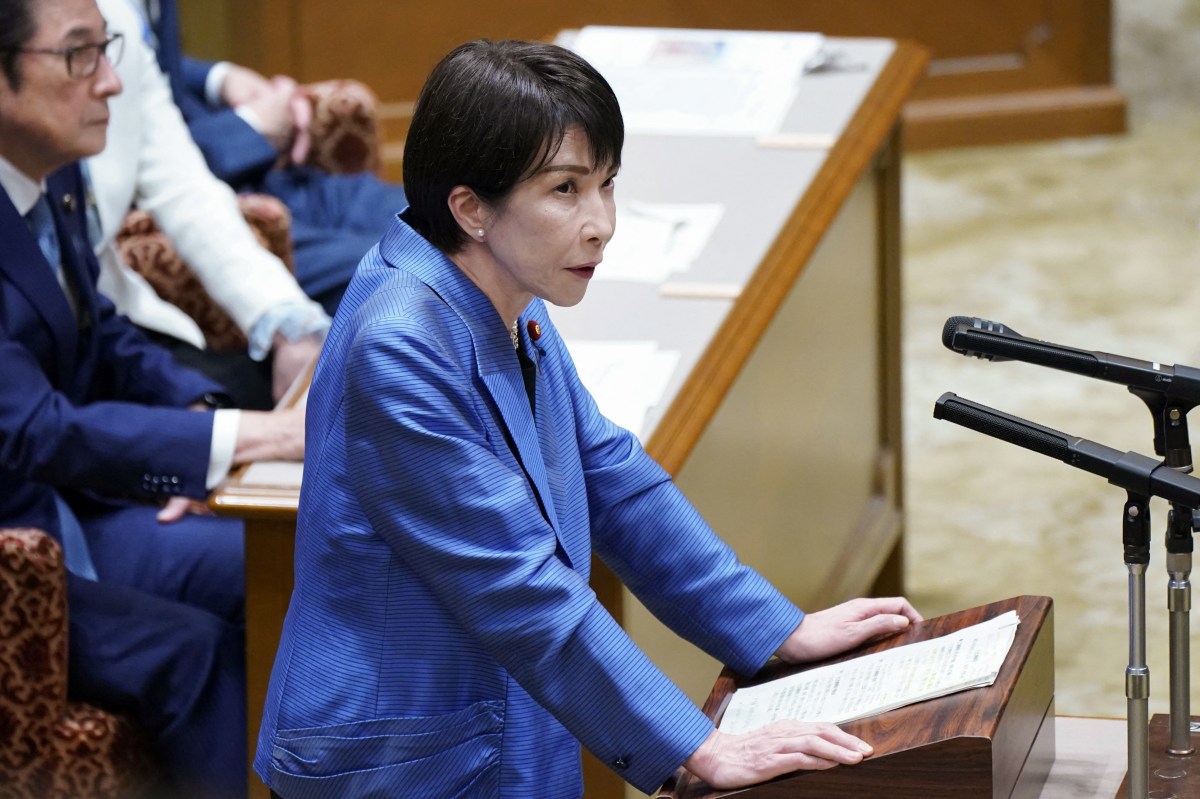
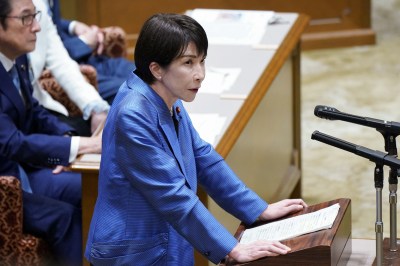
As it turned out, the show was halted because of orders from the Chinese government. The “unavoidable circumstances” were remarks made nearly a month earlier by Japanese Prime Minister Sanae Takaichi (who was previously a drummer and is a metal fan) in the Japanese Diet. During a November 7 question-and-answer session, opposition lawmakers asked Takaichi what situations might require Japan to engage in “collective self-defense,” meaning the defense of an ally. According to Japanese law, this would require a “survival-threatening” situation that imperils Japan’s fundamental security.
In response, she mentioned that Japan would likely be obligated to defend a country that technically isn’t an ally at all: Taiwan. It’s merely 68 miles from the nearest inhabited Japanese island and straddles vital shipping lanes. Were China to invade Taiwan, an American response would involve U.S. troops based in Japan. Such a conflict could threaten Japan’s very existence as an independent nation, argued Takaichi. “If it involves the use of warships and the use of force, I believe that this could constitute an existential threat,” she said.
You are receiving the free, truncated version of The Morning Dispatch. To read the full newsletter—and unlock all of our stories, podcasts, and community benefits—join The Dispatch as a paying member. This month, try us out for 30 days for just $1.

The Chinese Communist Party was not pleased with her comments. It has banned Japanese seafood imports and canceled around 1,900 flights from China to Japan, nearly 40 percent of all such air traffic. It has also attempted to reduce cultural links between the two countries, canceling concerts by Japanese performers in China and issuing travel advisories to discourage Chinese tour companies from leading trips to Japan.
Chinese Coast Guard boats also conducted patrols near the Senkaku Islands, a set of uninhabited islands administered by Japan, but claimed by China. The provocation was part of a longstanding Chinese “gray zone” strategy, using dangerous actions that fall just short of war, said Ray Powell, the director of the SeaLight Foundation, which monitors Chinese maritime activities.
The goal, he told TMD, is to intimidate. “There’s a Chinese proverb, ‘kill the chicken to scare the monkey,’” he noted. China wants to send a message that Takaichi “crossed this red line. Don’t anybody else think you’re going to be dumb enough to do this, too.”
Chinese officials are also attempting to isolate Japan diplomatically, appealing to foreign nations and the U.N. to condemn Takaichi’s statement and arguing that Japan is trying to resurrect its early-20th-century empire. “The international community must remain highly vigilant against Japan’s ambitions to expand its military capabilities and revive militarism,” wrote Fu Cong, China’s U.N. ambassador, in a letter sent to Secretary-General António Guterres on Monday.
In a call with President Donald Trump, Chinese President Xi Jinping referenced the U.S. alliance with China in fighting “fascism and militarism” during World War II, according to a Chinese press release (conveniently ignoring that the U.S. was allied with the Republic of China, not the Chinese Communist Party). And in calls with his counterparts in Britain and France ahead of a three-day trip by French President Emmanuel Macron to China, top Chinese diplomat Wang Yi asked both European countries to “safeguard the outcomes” of World War II.
Chinese anger at Japan’s numerous atrocities committed during the war is real, Stanford University foreign policy researcher Daniel C. Sneider told TMD. But it also reflects recent efforts to create a patriotic narrative centered on the Communist Party’s supposed victory over imperial Japan. “Since Tiananmen, the Chinese Communist Party has had to re-legitimize themselves” in the eyes of the Chinese populace, he said.
At the center of these efforts is the “Patriotic Education” initiative, a massive reorganization of school curricula and propaganda programs that emphasizes China’s overcoming the “century of humiliation,” the period spanning roughly from the mid-19th century to the end of the Chinese Civil War in 1949, when the country was unduly influenced by outside powers, including Japan. “The battle with Japan is central to that narrative,” said Sneider. “Central to it is the claim that the Chinese Communist Party wants to make, that we Chinese, and we the Chinese Communist Party, were the victors in World War II.”
Recent Chinese blockbuster films have reinforced this narrative of Japanese villainy, including this year’s Evil Unbound, which tells the story of Japanese biological experiments on Chinese prisoners during World War II. The Eight Hundred, released in 2020, depicts soldiers for the anti-Communist Nationalists fighting the Japanese as national heroes.
But if China has sought to revive memories of World War II, Japan has moved on. Its constitution, drafted in the years following the destruction of the Japanese empire in World War II, officially “renounces war as a sovereign right,” and vows to never maintain forces with “war potential.”
Over the years, successive Japanese governments have (somewhat creatively) interpreted these clauses to mean that Japan renounces offensive war but permits national self-defense, including maintaining the “minimum” level of military forces required to do so. Additionally, in 2014, Japan extended its definition of self-defense to “collective self-defense,” meaning that Japan would defend an ally if the conflict represented an existential threat.
Those revisions have generally been accepted in Japanese politics, at least by the right and center, said Guibourg Delamotte, a professor of political science at the French Institute of Oriental Studies. In many ways, Takaichi’s statement was simply an articulation of a generally accepted principle, albeit one that a sitting prime minister had never made. “Really, she was just stating the law, but getting grilled by the opposition,” Delamotte argued. “It’s very much about internal politics.”
And the opposition’s gambit to galvanize the more pacifistic parts of the Japanese electorate appears not to have worked. A Nikkei Asia public opinion poll, released on Monday, showed that Takaichi had a 75 percent approval rating, with 55 percent of respondents finding her statements on Taiwan appropriate and only 30 percent disapproving. Many ordinary Japanese people may see the slowdown in Chinese tourism as a silver lining, Sneider remarked, as exasperation with hordes of foreign visitors was a key talking point in the last election.
Japan has also made more substantial commitments to defense in recent years, beyond simply amending its laws. This week, the Cabinet approved a plan to spend an additional $7 billion on defense in fiscal year 2025 (ending March 31, 2026), putting its defense spending at over 2 percent of GDP. The increase includes longer-range defensive weapons, such as surface-to-air missiles, deployed on islands near China and Taiwan.
Chinese aggression in the Indo-Pacific is not the sole driver of Japan’s spending increase, and Russia’s invasion of Ukraine “had a huge impact in Japan,” Sneider said. The second page of Japan’s 2022 National Security Strategy, for example, cites the invasion as having “breached the very foundation of the rules that shape the international order,” six pages before any mention of China. Since the end of World War II, Russia has controlled the four southernmost Kuril Islands—known in Japan as the Northern Territories—which have become the subject of a Japanese government awareness campaign featuring Erika-chan, a tufted puffin mascot.
The Japanese public and leaders are also deeply concerned about the U.S.’s recent shift away from its traditional alliances. “Before Trump met with Xi Jinping in Korea, the discussion in Japanese media was all about whether or not Trump was going to sell out the Taiwanese for the sake of having a deal with Xi Jinping,” Sneider told TMD.
But the U.S. doesn’t appear inclined to back down on Taiwan. In his recounting of a call with Trump late last month, Xi stressed that he had told the U.S. president that Taiwan’s “return” to China was an “integral part of the postwar international order.” Trump did not mention Taiwan in his Truth Social post recounting the call, and held a call with Takaichi the next day. On Wednesday, he signed the Taiwan Assurance Implementation Act into law, which will functionally require U.S. officials to have regular contact with their Taiwanese counterparts. Chinese officials, as they had with Japan, called the move a “red line.”
How this dispute ends is unclear. “The challenge for Japan is that China is going to be offering off-ramps to them, which will require something of Japan,” Powell said. China tends to see diplomatic crises as opportunities, rather than necessarily problems to be solved. He cited the 2012 Scarborough Shoals incident, in which the U.S. mediated a dispute between China and the Philippines in the South China Sea. The Philippines agreed to withdraw from the disputed region, but China remains there to this day.
Takaichi can’t easily back down. Last week, Takaichi implied her remarks were off-the-cuff, saying that she merely sought to “respond faithfully” to a request for specific examples of when Japan would invoke collective self-defense. “Going forward, it is my responsibility to build a more comprehensive and positive relationship (with China) through dialogue,” she said.
But China’s demands may be steeper than that: “They want there to be an admission of wrongness, and she’s not going to do that,” Powell said. Delamotte agreed: “There’s no way she can take it back, because that would considerably weaken deterrence, and plus, the law is what it is.” On Tuesday, Taiwanese Foreign Minister Lin Chia-lung warned that the “situation may take a year to stabilize.”
Both Xi and Takaichi are locked in a staring match. “Once people have gotten themselves locked into these postures, it’s pretty hard to back off without appearing weak,” said Sneider. “And I don’t think either of these people wants to appear weak.”
Today’s Must-Read


Calls to ban the development of superintelligence have gained traction, including among more than a few policymakers. An artificial intelligence system so powerful that it could outthink humans would pose an existential threat to civilization, they argue. This idea rests not on evidence but on unsubstantiated fears, says Daniel Castro, vice president of the Information Technology and Innovation Foundation. Rather than outlawing advanced AI—something that doesn’t yet exist and may never take the form critics imagine—Castro advocates for oversight and accountability that addresses real risks without stifling the tools that could cure diseases, solve climate challenges, and expand human capability.

Today’s artificial general intelligence (AGI) race is strikingly similar to the dawn of the nuclear age, argues Jon B. Wolfsthal, a former senior director at the National Security Council, and must be treated with similar grave care. Just as America regulates biotech labs, auto safety, and aviation, Wolfsthal contends that the government must impose reasonable safeguards on AGI development before it’s too late—including serious attempts at international cooperation with China to prevent a dangerous race to the bottom. The question isn’t whether AGI might be our doom, he warns, but that it might be, and that uncertainty alone demands our attention.
Toeing the Company Line

Welcome to Tariff Complexity Hell
Complexity is a tax, and today U.S. companies are paying through the nose.

Killed by Democracy
Reflecting on the 1880 Republican Convention.

A New Feminism at Cambridge
A recently formed student group claims that ‘femaleness’ is based in biology.
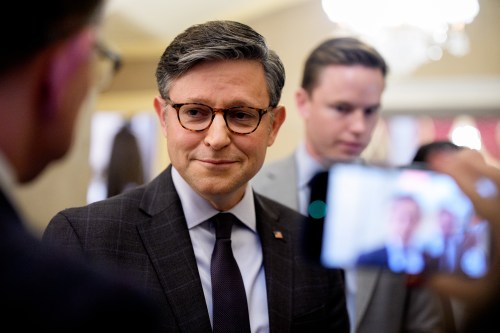
How the House Has Taken Itself Out of the Tariff Fight
GOP members have voted several times to bar any resolutions rescinding Trump’s import taxes.

Is the Deportation Campaign Prioritizing the ‘Worst of the Worst’?
ICE data shows a decrease in arrests and detention of people with criminal records.

In Other News
Today in America:
- President Donald Trump pardoned Democratic Rep. Henry Cuellar and his wife, Imelda, who were facing charges including bribery and money laundering. Cuellar says he will seek re-election in 2026—still as a Democrat.
- The Republican-controlled House Judiciary Committee subpoenaed former Justice Department special counsel Jack Smith for a private deposition later this month as part of an investigation into his prosecutorial work. Smith had previously offered to appear before an open hearing.
- The Justice Department sued six more states—Delaware, Maryland, New Mexico, Rhode Island, Vermont, and Washington—for failing to provide the federal government with statewide voter registration rolls.
- The Homeland Security Department confirmed previously reported plans of an illegal immigration crackdown beginning in New Orleans, officially dubbed, “Operation Catahoula Crunch.”
- In his second confirmation hearing, Trump’s nominee to head NASA, billionaire investor and private astronaut Jared Isaacman, emphasized his goal to return to the moon before China.
- The Trump administration issued new sanctions targeting associates of the Venezuelan-based gang and U.S.-designated terror group Tren de Aragua.
Around the World:
- The Indian government amended an earlier order requiring smartphone manufacturers to download a government-administered app onto every device, stating that pre-installation is no longer mandated. Apple had reportedly planned to resist the effort.
- Chile passed a new law banning phones and other electronic devices from elementary and middle school classrooms, effective next year.
- The European Commission announced new economic policies that it said would better position the EU to purchase and store resources, including raw earth minerals.
- German officials arrested two Iraqi nationals allegedly linked to the Islamic State.
- Russian cosmonaut Oleg Artemyev was removed from an upcoming trip to the International Space Station (ISS) aboard SpaceX’s Crew Dragon spaceship after he was reportedly caught sharing sensitive SpaceX company documents during training.
- Scientific researchers have discovered the first single gene found to be directly associated with schizophrenia.
On the Money:
- Treasury Secretary Scott Bessent said he supports mandating that Federal Reserve regional governors reside in their respective districts for at least three years before beginning their term.
- A new ADP report shows that U.S. private companies shed 32,000 jobs in November.
- Mexico’s central bank reported that the overdue balance on consumer credit—credit cards, payroll loans, personal loans, and auto loans—reached a record $2.9 billion in October. Remittances to Mexico have declined every month since April.
- Macy’s raised both its 2025 sales and earnings outlook after beating Wall Street expectations for the third straight quarter.
- The European airline manufacturer Airbus reduced its aircraft delivery target after determining that its A320 models required further testing.
- Delta Airlines CEO Ed Bastian told investors that the federal government shutdown cost the company an estimated $200 million.
Worth Your Time:
- “Elite Colleges Have an Extra-Time-on-Tests Problem” (The Atlantic)
- Adina Steiman on the 14 best new cookbooks of 2025. (New York Times)
- Noah Smith on why small businesses are essential for city growth and development. (Noahpinion)
- Ethan Strauss on family and gratitude. (House of Strauss)
- Hedge fund manager Michael Burry speaks with Michael Lewis about The Big Short and the market in the years since. (Against The Rules)
- Tyler Cowen interviews Dan Wang on progress and China. (Conversations with Tyler)
Presented Without Comment
The Hill: Hegseth Says He Wouldn’t Trust Miller, Rubio To Babysit His Kids
Also Presented Without Comment
The Independent: IRS Agents Will Be Required To Watch OnlyFans To Determine if Content Fits ‘No Tax on Tips’ Criteria
Also Also Presented Without Comment
Science Today: Wild Chimps Consume More Alcohol Than Anyone Expected
Let Us Know
Have any thoughts or questions about today’s newsletter? Drop us a note in the comments or by emailing us at tmd.questions@thedispatch.com. We read every submission, and your message could be featured in an upcoming “Behind the Scenes” segment.
Have any thoughts or questions about today’s newsletter? Become a member to unlock commenting privileges and access to a members-only email address. We read every submission, and answer questions in the following edition of TMD.





Please note that we at The Dispatch hold ourselves, our work, and our commenters to a higher standard than other places on the internet. We welcome comments that foster genuine debate or discussion—including comments critical of us or our work—but responses that include ad hominem attacks on fellow Dispatch members or are intended to stoke fear and anger may be moderated.
With your membership, you only have the ability to comment on The Morning Dispatch articles. Consider upgrading to join the conversation everywhere.