Turn any article into a podcast. Upgrade now to start listening.
Premium Members can share articles with friends & family to bypass the paywall.
Happy Thursday! French President Emmanuel Macron will appoint a new prime minister imminently, after his previous one resigned Monday following less than a month in office. It was France’s fifth prime minister in two years. Who knew France had so much in common with the Cleveland Browns?
Quick Hits: Today’s Top Stories
- Israel and Hamas on Wednesday agreed to a set of terms for a ceasefire and full hostage release, according to U.S., Israeli, and Hamas leaders, as negotiators from all three parties were in Egypt to finalize the deal. According to President Donald Trump, who said he would likely travel to Israel later this week, the agreement’s first phase includes the release of all Israeli hostages held by Hamas terrorists, and, in return, the Israel Defense Forces plan to partially withdraw troops from the Gaza Strip. “This means that ALL of the Hostages will be released very soon, and Israel will withdraw their Troops to an agreed-upon line as the first steps toward a Strong, Durable, and Everlasting Peace,” Trump wrote in a Truth Social post, adding that both sides would “be treated fairly.” The Times of Israel, citing an unnamed Hamas official, reported that the process will formally begin within 72 hours and with 20 living hostages being exchanged for nearly 2,000 Palestinian prisoners in Israel, including about 250 currently serving life sentences.
- Politico reported on Wednesday that the Trump administration is considering options to pay military troops as the federal shutdown continues. With service members set to miss their scheduled paycheck on October 15, Trump is currently considering executive actions to allocate funds for the payment but could also call on Congress to pass legislation to do, according to two unnamed White House officials cited in the story. Meanwhile, the Internal Revenue Service wrote in a Wednesday memo that furloughed federal employees are required by law to be paid for the duration of their forced time-off once the shutdown ends. That guidance comes one day after Axios reported that a drafted White House memo argued the law provided no such provision.
- Colombian President Gustavo Petro wrote on X on Wednesday that civilians from his country had been aboard one of the suspected drug-trafficking boats destroyed by the U.S. military. “Indications show that the last boat bombed was Colombian with Colombian citizens inside it,” he tweeted. “I hope their families come forward and report it.” Since the beginning of September, the U.S. military has ordered separate air strikes on four boats it says were cartel-affiliated and transporting illegal narcotics to the U.S., most recently on October 3, which Defense Secretary Pete Hegseth said killed four suspected traffickers off the coast of Venezuela.
- Burma’s ruling military junta bombed a crowd of civilians on Monday who had gathered to celebrate a Buddhist festival, killing at least 24 people. The junta had returned to power in a military coup in February 2021 following an election which its affiliated party lost—and the group has, without evidence, attributed to voter fraud—instigating a civil war that has continued since, though the military currently holds most of the country’s territory. Monday’s attack was carried out by a motorized paraglider, who dropped the bomb onto the gathering of about 100 holiday festival attendees.
- U.S. Northern Command stated on Wednesday that 500 National Guardsmen arrived in Chicago to engage in “federal functions, including the enforcement of federal law, and to protect federal property,” following Trump’s decision to activate the troops earlier this month. According to the military’s statement, the force is composed of approximately 300 Illinois National Guard troops in addition to 200 Texas National Guardsmen, half of the total that Texas Gov. Greg Abbott offered to the White House for deployment in the city. On October 6, both the Illinois state government and the Chicago city government sued the administration, challenging Trump’s legal authority to make such an authorization. On Wednesday, Trump wrote on Truth Social that Illinois Gov. JB Pritzker and Chicago Mayor Brandon Johnson “should be in jail for failing to protect Ice Officers!”
- Several news outlets reported Wednesday that the United Nations is planning a 25 percent reduction to its peacekeeping force, which currently has about 50,000 soldiers from various U.N. member nations, in addition to a 15 percent cut to the force’s budget. Sources further told the Washington Free Beacon that U.S. Ambassador to the United Nations Mike Waltz secured the changes earlier this week. “It’s clear that the Trump administration is committed to reforming the United Nations, starting with the most serious cuts to global peacekeeping missions in decades,” one unnamed Western diplomat told the Beacon. Trump, in an address before the U.N. General Assembly on September 23, said that the U.N. is “not even coming close to living up to [its] potential.”
- The U.S. Attorney’s Office in the Central District of California announced on Wednesday that authorities arrested and charged Jonathan Rinderknecht, 29, for having “maliciously started” the blaze that later developed into the Palisades Fire, which went on to devastate southern California and kill 12 people earlier this year. Prosecutors allege that on New Year’s Day, Rinderknecht, of Melbourne, Florida, started what would later be called the Lachman Fire, which eventually grew to become the Palisades Fire. Federal authorities stated he called 911 to report the blaze and later returned to film firefighters at work to put it out. “Among the evidence that was collected from his digital devices was an image he generated on ChatGPT depicting a burning city,” acting U.S attorney Bill Essayli posted on X on Wednesday. Rinderknecht had also allegedly asked ChatGPT, “Are you at fault if a fire is lit because of your cigarettes?”
- Former FBI Director James Comey pleaded not guilty to two federal charges Wednesday: one count of making a false statement and another of obstruction after being indicted on September 25. The charges relate to his testimony before a Senate committee in September 2020 regarding whether Comey authorized someone at the FBI to leak information about the investigation into Hillary Clinton and her email server, according to a CNN report (initial speculation about the charges centered on Comey’s involvement in the 2016 investigation into Trump and election interference by Russia). Comey faces up to five years in prison if convicted. Defense attorney Patrick J. Fitzgerald said he plans to file a series of motions seeking to dismiss the case, arguing that the prosecution is vindictive, that the grand jury process was abused, that the Justice Department engaged in outrageous conduct, and that the interim U.S. attorney appointed by Trump, Lindsey Halligan, was illegally installed. Trump urged prosecutors to move forward with the case, despite the Justice Department’s concerns about insufficient evidence, and Halligan took up the case after her predecessor, Erik Siebert, declined to charge Comey and resigned. The trial is set to start on January 5, 2026.
- News outlets reported on Wednesday that during a White House meeting this week Trump and Canadian Prime Minister Mark Carney discussed reviving a now-folded Keystone XL oil pipeline plan that would run across the border from Alberta to the U.S. First commissioned in 2010, partial sections of the pipeline run through the U.S., but others were vetoed by then-President Barack Obama in 2015, and, more recently, former President Joe Biden revoked the construction permit for the project in January 2021. While Carney reportedly brought up the idea to Trump, the president in February called for the pipeline to be completed.
- Democratic Gov. Gavin Newsom of California signed a law on Wednesday to phase out ultra-processed foods from school lunch programs, specifically, those that are “the most concerning,” according to his office. The phaseout will occur over 10 years. The same legislation also set a legal definition for which food products are to be labeled as “ultraprocessed food of concern” and banned from school meals.
- Professors Susumu Kitagawa of Kyoto University, Richard Robson of the University of Melbourne, and Omar M. Yaghi of the University of California, Berkeley, were awarded the Nobel Prize in Chemistry for the development of metal-organic frameworks, a new form of molecular architecture that packs vast internal spaces into tiny crystalline structures. The resulting materials can store and transport huge amounts of gases and other chemicals, enabling applications such as carbon capture, water harvesting from desert air, and catalyzing chemical reactions.
A message from The Dispatch

Stay Ahead of the Curve With Dispatch Energy
The Dispatch’s newest weekly newsletter, presented by Pacific Legal Foundation, will dive into the politics, policy, and innovation shaping America’s energy future. Featuring a rotating roster of contributors who are experts in their respective fields, each edition will feature incisive analysis on everything from oil and gas and permitting regulations, to renewables, climate, and the grid.
A Tale of Two Economies

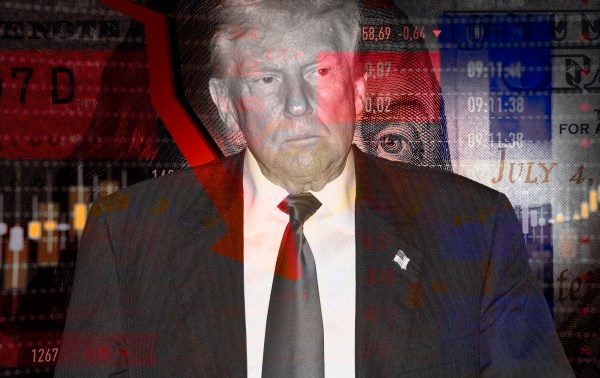
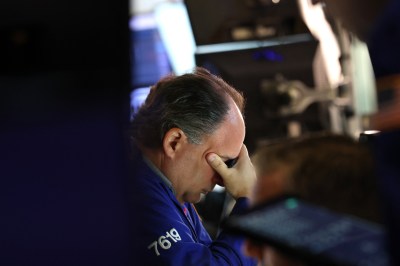
Gen Z is making jokes about “recession indicators,” gold has hit record highs, Steve Carell’s character from The Big Short is doing podcast appearances, JP Morgan Chase CEO Jamie Dimon is “far more worried than others” about a serious market correction, and people are feeling—to use the president's term—“yippy.” If you go looking for economic red flags, you'll see a lot of crimson. Readers of TMD might then be wondering whether the time has finally come to stock up on those jugs of potable water, and trade all that cash hidden under your mattress for cartons of cigarettes, a pallet of multi-ply toilet paper, and crates of canned vegetables.
TMD is not an investment adviser, but our answer is “probably not,” at least not yet. While the U.S. economy doesn’t appear to be on the precipice of a steep and destructive crash, it isn’t shooting into the stratosphere either. In a tug-of-war between expansive tech investment and contractive labor and trade policy, the country is showing both promising signs of resilience and concerning signals of stagnation.
As a non-paying reader, you are receiving a truncated version of The Morning Dispatch. You can read our full item in the members-only version of TMD.
“It’s hard to figure out what’s happening with the economy right now,” Michael Strain, economist at the American Enterprise Institute, told TMD. “More than is usually the case, to get a handle on what’s happening right now really does require you to look at a pretty broad range of indicators.” Mark Gertler, professor of economics at New York University and co-director of the National Bureau of Economic Research’s Economic Fluctuations and Growth Program, said that uncertainty stems from pressures that are pushing the economy in both positive and negative directions. “The situation is not clear,” he told TMD. “There are offsetting forces.”
On one hand, the Trump administration’s sweeping tariffs are beginning to drive up costs for businesses across the country, especially in sectors such as manufacturing. That cost pressure is keeping inflation stubbornly above the Federal Reserve’s 2 percent target and is giving the Federal Open Market Committee a headache as it weighs lowering interest rates. Coupled with tariffs, the administration’s clampdown on both legal and illegal immigration is challenging industries like agriculture and construction that rely heavily on migrant labor. “There’s no question in my mind that the administration’s economic policies, including most prominently the tariffs, the clampdown on immigration, and the challenging of Fed independence, are creating headwinds for the economy,” Kimberly Clausing, professor of tax law and policy at the University of California, Los Angeles, told TMD.
On the other side of the ledger is the investment boom in artificial intelligence, which is already filtering billions of dollars into the American economy. “AI has contributed to keeping investment up, and potentially keeping the stock market up as well,” Gertler said. “So there is hope there.”
While the narrative surrounding tariffs, immigration, and AI is compelling, how that story is actually unfolding across the economy is a bit more complicated. For one, traditional indicators of economic health, such as GDP growth, unemployment, new job creation, inflation, and stock and bond market performance, are currently a mixed bag. For example, even though August’s 2.7 percent annualized PCE rate—the Federal Reserve’s favored measure of inflation—shows an upward trend in prices, and markets are pointing to inflation remaining above the Federal Reserve’s target for at least the next five years, that rate is still relatively low—and stable—by historic standards. Similarly, while the country’s unemployment rate—4.3 percent in August—remains low, it is still slowly ticking up, especially for black Americans, which could be an early indicator of an economic slowdown. Job creation numbers are also well below expectations, with the country adding only 22,000 new nonfarm jobs in August, according to the Bureau of Labor Statistics, down from 142,000 new jobs during the same period in 2024. (September jobs numbers have not yet been released because of the ongoing federal government shutdown.)
On the GDP front, the Bureau of Economic Analysis announced in September that the U.S. economy grew at a 3.8 percent annualized rate in the second quarter of 2025—a stronger-than-normal pace bolstered by robust consumer spending and falling imports (which detract from GDP). However, economic forecasters expect that growth rate to drop significantly through 2026, with the Federal Reserve Bank of Philadelphia’s August Survey of Professional Forecasters estimating that GDP growth would be only 1.6 percent next year.
While the diversity of the U.S. economy always complicates the overall picture, that’s especially true right now as the Trump administration’s approach to economic policy creates an environment with substantial variability among different sectors. “There are periods of boom and bust in the U.S. economy, where pretty much everything’s rising or falling together, where there’s a common dynamic. People are expanding because other people are expanding, or people are fearful and holding back because other people are fearful and holding back,” Adam Posen, president of the Peterson Institute for International Economics, told TMD. “This is not one of those times.” Instead, Posen explained, the U.S. economy is in an abnormal, yet not unheard-of, period when the performance of different parts of the economy is increasingly divergent. “And, absent financial shock or huge shift in Fed policy or tax policy, that can go on for a long while,” he said.
This divergence, and economists’ uncertainty about the economy, is heightened further by the fact that many of the administration’s policies are only beginning to make themselves felt across the country. “The president’s trade and immigration policies have not hit the economy with full force, and when they do, that’s going to slow the growth rate of the economy, it’s going to slow consumer spending, and it’s going to increase the unemployment rate,” Strain said. “But it’s good news that hasn’t really happened yet.”
According to Yale University’s Budget Lab, the average effective tariff rate on goods imported into the U.S. was nearly 19 percent in August—the highest the country has seen since the Great Depression. But because firms typically price their goods and services based on the cost of their existing inventories, that price pressure hasn’t fallen on consumers yet. “A number of [firms] have inventories that haven’t been affected by the tariffs,” Gertler said. “But as the year goes on, you’re going to feel the effects of the tariffs more and more.” Just how long it will take for those effects to peak depends on who you ask. Posen, for one, doesn’t think the inflationary effects of the administration’s first wave of tariffs will crest until the middle of next year. “It was always going to take a while,” he said.
As those effects take hold, the country will look toward its soaring tech industry, driven by massive investments in artificial intelligence, to make up the difference. “At any given time of strong economic growth, that growth is coming from a small number of sectors,” Strain said. “So to say growth is strong in the third quarter of 2025, but ignoring where the growth is coming from, is not a reasonable way to analyze the economy.” Even if the AI boom turns out to be a bubble, the investment stemming from it is real, and not every tech company with soaring valuations will get burned as the race for AI dominance chugs ahead. “I don’t get worried when one part of the economy is being the locomotive for a given period, I get worried if that part of the economy is doing it either on the basis of huge leverage or on the basis of obviously incorrect valuations, or is heavily dependent on some kind of input or specialized niche market,” Posen said. “None of those are true for the AI-associated investment.”
If TMD could accurately predict exactly where the U.S. economy will be a year from now, we would all be working as hedge fund analysts in Connecticut, not writing this newsletter. But in September economic outlook reports from Ernst & Young, S&P Global, and Wells Fargo all put the odds of the U.S. entering a recession over the next 12 months at between 30 and 40 percent. That’s around twice as high as in a typical year, but still overall far from certain.
Trust seems to be falling among many participants in the U.S. economy, regardless of how American industry performs over the next year and beyond. The value of gold and cryptocurrencies like Bitcoin and Ethereum are at an all-time high—signals that Americans are increasingly wary of traditional assets and worried about inflation. “It tells us that the fundamental breakdown in trust of government and lasting institutions and of government money, whether for fiscal or monetary doubts, is very real and widespread,” Posen said. Since the beginning of the year, consumer sentiment has again been trending downwards following a brief period of recovery in 2022 and 2023. Americans now feel about as negatively about the economy as they did during the stagflation of the 1970s and early 1980s, the Great Recession, and the COVID-19 pandemic.
But for now, the American economy continues to show its resilience, even in the face of policies that many mainstream economists view as self-inflicted harms. “While we’re not in a recession, clearly, I think growth would be a lot stronger if the administration hadn’t enacted their economic agenda,” Clausing said. “The growth we are seeing is something that was sort of baked in due to the AI revolution.” But, in Clausing’s eyes, there is at least some long-term upside to the Trump administration’s tariff and immigration agenda. “I actually think one of the only good things about this chapter is people are going to get a big economics lesson, and they’re going to realize, well, if we care about grocery prices and all these things we claim to care about, we probably shouldn’t drive away labor and raise tariffs,” she said. “Those are, I think, useful lessons that might allow better policy down the road.”
Today’s Must-Read

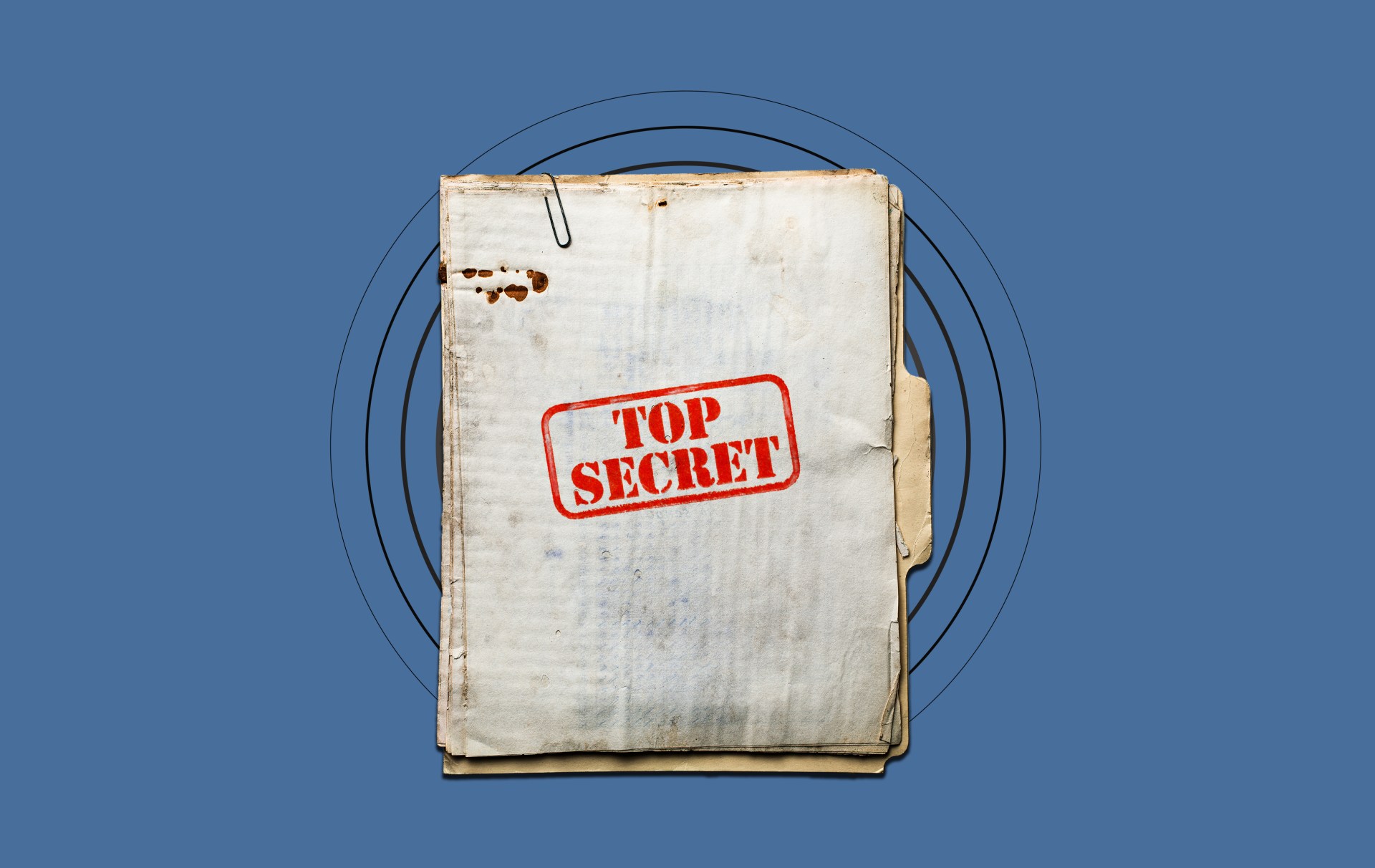
The Espionage Act of 1917 has been described as a loaded gun pointed at journalism. It is not difficult to understand why. Among other things, the statute criminalizes the unauthorized possession or communication of “national defense information,” a strikingly vague term. If journalists were routinely arrested and prosecuted for conveying such information to the public, our understanding of American foreign policy would be severely impoverished. Indeed, the practice of national security journalism would be destroyed and we would be reduced to a Soviet or Chinese Communist style flow of state-controlled information. But the fact remains: Protecting legitimate military and foreign policy secrets is a vital national security task.

Government officials tend to dislike it when their employees disclose information to journalists that casts their department in a negative light. But Secretary of Defense Pete Hegseth is taking the Cabinet secretary’s natural dislike for press leaks to another level. Last month, Hegseth announced that, going forward, journalists covering the Pentagon will have to sign a pledge to refrain from gathering or publishing information not authorized by the Department of War (the Trump administration’s new moniker for the Department of Defense). “DoW remains committed to transparency to promote accountability and public trust,” the order says. “However, DoW information must be approved for public release by an appropriate authorizing official before it is released, even if it is unclassified.” Journalists who refuse to abide by this directive could not only lose their press credentials but also be deemed “a security or safety risk.” (On Monday, under vocal pressure from the Pentagon press corps, Hegseth walked back the measure).
Toeing the Company Line
The Tucker I Knew
Populism and the glorification of childishness.

Trump’s New Furniture Tariffs Are (Almost) Everything Wrong with U.S. Trade Policy Today
There is no ‘national security’ basis for them, and they won’t accomplish the administration’s stated goals.
Bad Bunny’s Super Bowl Halftime Gig Prompts a Slew of False Claims
The Puerto Rican rapper has not withdrawn from performing, nor has the NFL canceled his scheduled appearance.
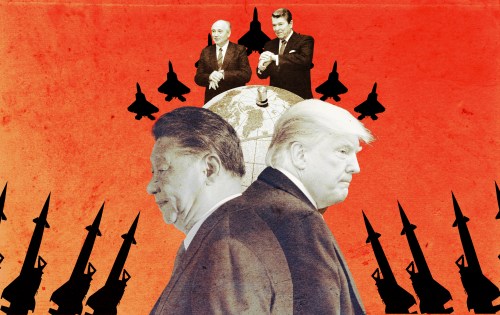
Cold War Statecraft for the 2020s
How the U.S. victory over the Soviet Union can guide our thinking on China.
Conversion Therapy and Free Speech
Why do the merit docket cases feel dull and predictable?
Puritans, Canadians, Weberians, Oh My! | Interview: Molly Worthen
A spiritual smorgasbord.

Worth Your Time
- Not long ago, Kevin Costner was one of the most bankable stars in Hollywood, taking a leading film career to TV with the mega-hit Yellowstone. But then he left Yellowstone to self-fund a four-part Western epic, Horizon: An American Saga (only Part 1 of which was released), and he started to earn a bad reputation in Hollywood. As Peter Kiefer writes for his Hollywood Reporter cover story, “How Kevin Costner Lost Hollywood,” he has “a career marked by feuds, walkouts, lawsuits, financing fiascos and a growing reputation for being, as one former colleague put it, ‘impossible.’” Kiefer continues: “There’s a long list of people in Hollywood who swear they’ll never work with Costner again. And they all have their reasons. He doesn’t always pay his bills on time — one since-settled lawsuit alleged hundreds of thousands in unpaid costume fees. He burns through relationships — like his longtime producing partner, whom he sued for $15 million. He ignores advice, even from folks like Steven Spielberg. He rewrites scripts without warning, overrules directors and on more than one occasion has clashed with his co-stars — including Clint Eastwood, Kurt Russell … and Wes Bentley.”
Presented Without Comment
Associated Press: US Diplomat Fired Over Relationship With Woman Accused of Ties to Chinese Communist Party
The State Department said Wednesday that it has fired a U.S. diplomat over a romantic relationship he admitted having with a Chinese woman alleged to have ties to the Chinese Communist Party. The dismissal is believed to be the first of its kind for violating a ban on such relationships that was introduced late last year under the Biden administration.
Also Presented Without Comment
Politico: ‘Get Out of My F--king Shot’: Katie Porter Tears Into Staffer in Newly Released Video
Also Also Presented Without Comment
The Guardian: Trump To Visit Walter Reed for ‘Routine Yearly Checkup’, the Second Since April
Behind the Scenes
Today’s “Behind the Scenes” comes in response to a question on Monday’s issue from DeniseM about South Carolina Circuit Court Judge Diane Goodstein’s house burning down:
Kinda surprised no mention of Judge Diane Goodstein’s home exploding and burning to the ground Saturday in Edisto Beach, SC. Goodstein recently blocked SC from sharing voter data with DOJ.
TMD Editor Ross Anderson: Our goal with every day’s edition of TMD is to provide busy readers with a one-stop shop where you can get the news that we think you need to know to start your day. Almost as important as selecting what goes into the newsletter each morning is determining what doesn’t. There are plenty of places where you can get noise, outrage, and speculation—but we view it as part of our job to filter that out.
While Judge Goodstein’s home burning down is certainly tragic—and would make sense as a story in South Carolina-focused outlets—the reason the news received pickup in national media was because of the potential political implications. Goodstein’s husband is a Democratic former state senator, and Goodstein herself had recently issued a preliminary decision siding against the Trump administration, blocking South Carolina from giving the Justice Department access to the state’s voter database.
Speculation about whether the fire was an act of arson—and a politically motivated attack—ran rampant, but at the time of publishing on Monday, we had little to no information from reliable sources about the cause of the fire. Even if we caveated the Quick Hit, our decision to include a writeup would imply to readers that we believed the online speculation was valid.
If law enforcement later attributed the fire to arson and identified a suspect with a political motive, we likely would have included the news as part of a broader look at rising political violence. But by Monday afternoon, Mark Keel, the chief of the South Carolina Law Enforcement Division, had said that investigators had found “no evidence to indicate the fire was intentionally set” and “no evidence to support a pre-fire explosion.”
Sometimes the nature of a given story will require that we do cover it before we have all the relevant details, and the limited information that we have in the moment can paint an incomplete or inaccurate picture. In those cases, we always try to caveat our coverage and provide as much context as possible. At the end of the day, though, these are judgment calls and we won’t always get them right. But in this case, waiting for all the facts to come out before including the news in TMD paid off.
To read TMD editor Ross Anderson’s response to the question—or to submit one of your own—become a member today.
Let Us Know
Have any thoughts or questions about today’s newsletter? Drop us a note in the comments or by emailing us at tmd.questions@thedispatch.com. We read every submission, and your message could be featured in tomorrow’s “Behind the Scenes” segment.
Have any thoughts or questions about today’s newsletter? Become a member to unlock commenting privileges and access to a members-only email address. We read every submission, and answer questions in the following edition of TMD.




Please note that we at The Dispatch hold ourselves, our work, and our commenters to a higher standard than other places on the internet. We welcome comments that foster genuine debate or discussion—including comments critical of us or our work—but responses that include ad hominem attacks on fellow Dispatch members or are intended to stoke fear and anger may be moderated.
With your membership, you only have the ability to comment on The Morning Dispatch articles. Consider upgrading to join the conversation everywhere.