
Late last month, the majority staff of the Senate’s Homeland Security and Governmental Affairs Committee issued a 106-page report on the intelligence failures leading up to the January 6 “surprise” attack on the U.S. Capitol. Reading through the report, one can’t help but be gobsmacked by the amount of available, open-source information officials had about Trump supporters coming to Washington armed and threatening violence. Nor was there a shortage of online discussion and tips about attendees directing their ire toward the Capitol, Congress, and the final tallying of the Electoral College votes.
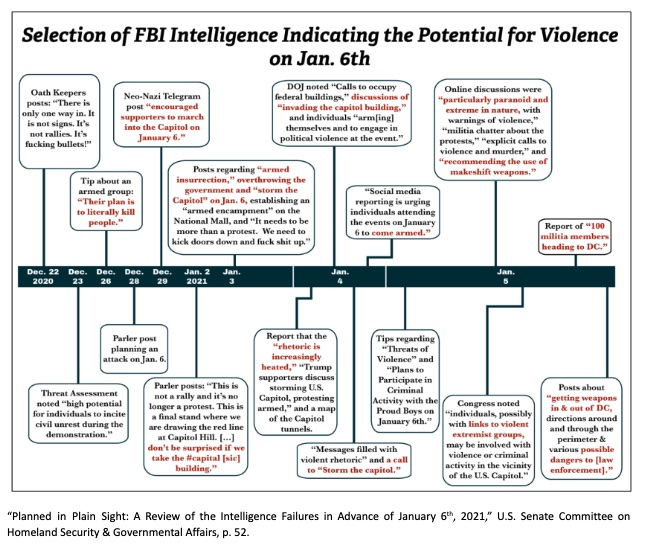
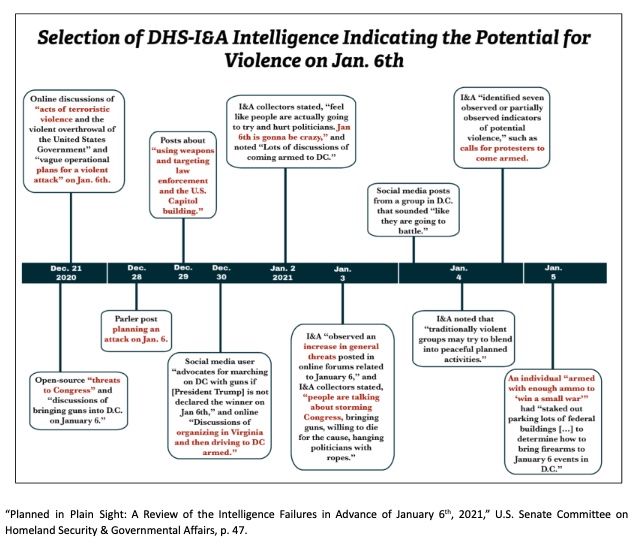
Nevertheless, neither the FBI nor the intelligence arm of the Department of Homeland Security assessed that there was a “credible” threat of civil disobedience, let alone actual violence. There were no official warnings given to the police and security officials responsible for protecting the Capitol or congressional proceedings.
Why the failure?
The FBI’s answer has been that it did not have a single credible source offering knowledge of such a plan. As one senior bureau agent testified to the January 6 Select Committee: Sure, “there was some rhetoric out there that we should, you know, storm the Capitol, but it wasn’t like, ‘let’s go storm the Capitol, we are going to storm the Capitol.’” Without evidence of a specific plan, the FBI believed it was precluded from further investigating these multitude of online boasts because they were protected free speech.


Please note that we at The Dispatch hold ourselves, our work, and our commenters to a higher standard than other places on the internet. We welcome comments that foster genuine debate or discussion—including comments critical of us or our work—but responses that include ad hominem attacks on fellow Dispatch members or are intended to stoke fear and anger may be moderated.
With your membership, you only have the ability to comment on The Morning Dispatch articles. Consider upgrading to join the conversation everywhere.