Turn any article into a podcast. Upgrade now to start listening.
Premium Members can share articles with friends & family to bypass the paywall.
You’re reading Boiling Frogs, Nick Catoggio’s daily newsletter on politics. To unlock the full version, become a Dispatch member today.
Political parties seldom win by losing, but Democrats got an ideal result from yesterday’s House special election in Tennessee—almost.
Their candidate, Aftyn Behn, lost the race to represent that state’s 7th District by 9 points. It probably would have been better for Team Blue had she lost by, say, 15.
Behn performed 12 points better than her party’s nominee in last fall’s House race, continuing the Democrats’ streak of beating their 2024 margins by double digits in every House special election this year. She also outpaced Kamala Harris’ share of the vote in her district by 13 points. If a shift of that magnitude were to occur uniformly across America in next year’s midterms, Democrats would be looking at a House pick-up on the order of 40 seats.
She managed all of that despite Republicans having enjoyed every advantage. Donald Trump won the district by 22 points; he and Speaker Mike Johnson appealed personally to local Republicans to turn out for Tuesday’s vote; GOP outside groups outspent Democratic ones by nearly a million dollars; and Behn was a poor fit for the right-leaning electorate, having previously endorsed far-left cultural nonsense that led some to call her the “AOC of Tennessee.”
It should have been a thumping, particularly given that GOP voters did answer the president’s call to turn out. It ended up a single-digit race. That’s a nearly perfect result for Democrats.
Why was defeat preferable? For starters, an upset victory by Behn would have convinced progressives that freaks in the “defund the police” mold can win anywhere, even the Bible Belt, which would have encouraged them to nominate more misfits next fall. Inevitably they would have fumbled away some otherwise winnable races in reddish districts—as, perhaps, Behn herself did last night. Because she lost, Democratic voters will be more cautious about passing over broadly acceptable moderates for exciting lefty bombthrowers in House primaries. Their crop of midterm candidates will be stronger on balance.
Defeat was useful for another reason, though. It reduced the odds that control of the House will flip to Democrats before the 2026 midterms.
The current margin in the House is tight enough that, with a few more Democratic victories in upcoming special elections, the GOP’s advantage could wither to two or three votes. At that point, retaining the majority through next November will depend not just on the continued good health of all Republican members but on their willingness to serve out their current terms, something that can no longer be taken for granted.
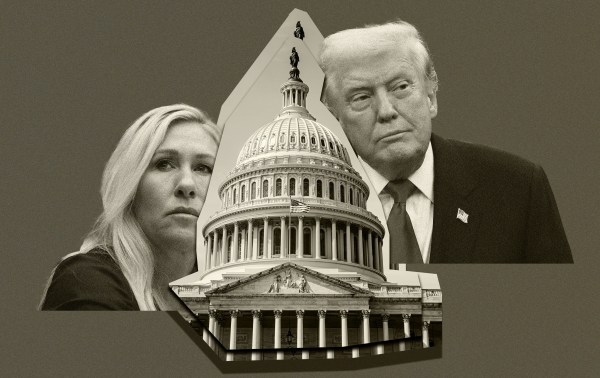
That’s why I say that a somewhat more lopsided defeat last night might have been optimal for liberals. Behn losing by 15 might have convinced vulnerable House Republicans that they still have a fighting chance of holding their seats next year and therefore should stick around. Whereas Behn losing by single digits feels more like a “head for the lifeboats” moment, potentially discouraging enough to GOPers who feel exhausted by Trump’s Washington that a few might follow Marjorie Taylor Greene into early retirement.
There’s now a scenario, in other words, in which Rep. Hakeem Jeffries takes the gavel before January 2027. Which is something he and his party … probably shouldn’t want.
You are receiving the free, truncated version of Boiling Frogs. To read Nick’s full newsletter—and unlock all of our stories, podcasts, and community benefits—try The Dispatch for 30 days for just $1.

Stories We Think You’ll Like
Democrats Test the Waters on Free Trade
The issue is fraught for the party, but lawmakers and 2028 hopefuls are increasingly critical of President Trump’s tariffs.

Taking the Rural Route
Abigail Spanberger’s victory shows how Democrats can appeal to voters outside the big cities.
‘We Cannot Just Play Defense’
Elissa Slotkin says the Democratic Party needs new leaders and a plan. The Michigan senator is volunteering herself for both.
The downside of power.
That’s perilously close to a hot take, I realize, and not just because it’s weird for political factions to eschew power.
Obviously, the minority should favor any outcome that causes members of the majority to retire en masse, as it’s sure to fare better against unknown opponents than it would against incumbents who are universally known in their districts. Insofar as Behn’s overperformance will incentivize more House Republicans not to run for reelection, it helped her party’s midterm chances.
But if it incentivizes them so much that a handful end up quitting early, thereby handing control of the chamber to Democrats before November, there’s a case to be made that that will produce a narrower-than-expected liberal victory next fall. And that would be a steep cost relative to the meager benefits of gaining a slender surprise majority in the House sometime in 2026.
Start here: How would Democrats benefit from taking the gavel from Mike Johnson before the midterms?
They’d get to set the House agenda, of course, and there’s some value in that—but not a ton given that Republicans remain in charge in the Senate and will snuff anything Jeffries and his caucus send over. The most useful thing House Democrats could do with their new power would be to jam the Senate with a series of bills targeting the cost of living, starting with “affordability” measures on health care, knowing that Senate Majority Leader John Thune’s conference would vote them down and in so doing hand Democrats a midterm talking point.
But liberals don’t need a House majority for that. They’re going to get a vote on extending Obamacare subsidies in the Senate next week, per the deal they reached with Thune to end the shutdown. Republicans will defeat the measure and the Democratic midterm talking point will be secure. Better still for them, the president continues to chatter insanely on camera that the affordability crisis is some sort of left-wing “con job.” Nothing that happens in Congress between now and November will be as useful to Team Blue’s campaign messaging as that.
The other thing Democrats would gain by retaking the House early is subpoena power, of course. They, not the GOP, would now be in charge of oversight committees, which means that long-overdue investigations into the many tentacles of Trump administration corruption could finally begin.
That’s a great thing on the merits! Is it great for Democrats’ midterm chances?
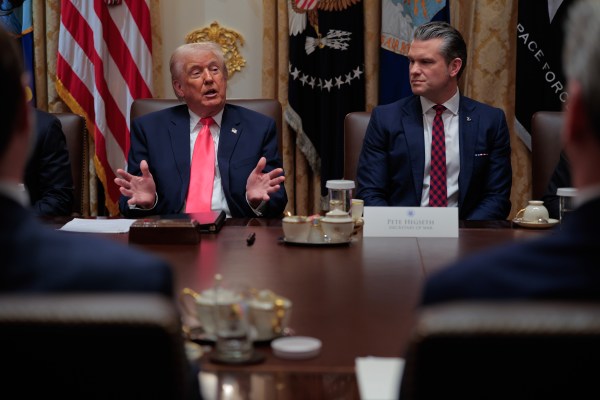
As an answer, consider that when Jeffries was asked this week about impeaching Defense Secretary Pete Hegseth for possible war crimes in the Caribbean, he wanted no part of it—ostensibly because the effort would be futile but in reality, I think, because it would be counterproductive. He surely understands that his party’s path to a midterm landslide runs through three simple points: affordability, affordability, and affordability. Anything that diverts Democrats from that risks weakening the party’s appeal, including meritorious probes into just how much of a “sickening moral slum” the federal government under Trump has become.
In a better time, with a better people, the opposition party in Congress might expect to benefit electorally from exposing presidential malfeasance. (See, for instance, the results of the 1974 midterms.) There’s no reason in principle that Democrats couldn’t walk and chew gum at the same time here, hammering Trump over the rising cost of living on the one hand while goosing public resentment toward him by revealing his self-enrichment schemes on the other.
But this is not that time and we’re no longer that people, and so my guess is that House Democrats using their power to drill down on White House corruption would backfire. Republican voters would rally tribally around their besieged chief, as they always do when anyone tries to hold him accountable for anything. And swing voters might infer that Joe Biden’s party, which seemed so out of touch to them last November, still has its priorities out of whack. Americans are begging for help making ends meet, and the first thing Jeffries and his caucus do with their new House majority is … investigate Pete Hegseth?
Meanwhile, progressives and other diehard Trump-hating liberals would be angry if Democrats didn’t seize the opportunity to expose the administration’s various civic depravities. Even if Jeffries ignored them initially, inevitably Trump would do something impeachable (as he does routinely) and the new speaker would be left with a no-win dilemma of getting sidetracked from affordability by pursuing the president or being accused of abetting him by ignoring it. Either the left or the center would be peeved at him depending on what he decided, and the previously demoralized right might suddenly feel gung-ho to show up for the midterms to defend Trump from the latest “witch hunt” by a Democratic-controlled House.
How do you suppose that would affect the chances of a blue wave next November?
Super-referendum.
A simpler way to make the point is that the opposition typically prevails in midterms (usually by big margins) because voters treat the election as a referendum on the president’s first two years, not as a choice between the two parties. Regaining control of the House before next November would confound that for Democrats. Once they’re back in charge of part of the government, they’ll bear some responsibility in Americans’ eyes for the state of the country. The election won’t be a pure referendum on Trump anymore.
And a pure referendum on Trump looks very, very bad for Republicans at the moment.
What we’re looking at next fall might more usefully be thought of as a “super-referendum,” in fact, and not just because the president’s party controls both houses of Congress. Because he’s so domineering and ubiquitous, because his authoritarian ambitions are so blatant, and because his allies in Congress are so servile, Trump is the government right now to a degree that no other modern president has been. That’s likely why, despite the fact that Democrats instigated the shutdown, so many polls showed him and his party bearing most of the blame for it. And why, unusually for presidents in their first year in office, he’s being held responsible for the state of the economy more so than his predecessor.
For the average American who barely understands how their own government works, the idea that anyone other than Trump wields power has become almost inconceivable. If federal agencies aren’t operating or if the cost of living isn’t shrinking, it must be his fault. Who else’s fault could it be?
That’s the logic that the GOP will have to somehow contend with next fall. It must be his fault. Who else’s fault could it be? Why would Democrats want to complicate that by regaining control of the House a few months early, without anything meaningful to be gained by doing so?
Keeping the political spotlight exclusively on the president benefits the opposition in other ways. For one thing, a demagogue like Trump suffers whenever he’s deprived of a foil. So long as Democrats remain powerless in Washington, Trump’s thirst for enemies will lead him to lash out at less opportune targets. People whom his own supporters admire, for instance. Or Somali migrants, whom he described repeatedly yesterday as “garbage.”
He’s also begun to deteriorate visibly as he lurches toward his 80th birthday. More than once lately he’s been caught nodding off during meetings. His daily work hours, never long to begin with, have gotten conspicuously shorter. Mysterious health maladies and even more mysterious tests are now a recurring subplot in his media coverage. And his outbursts have somehow gotten less inhibited, from calling a woman reporter “piggy” to the vicious bigotry of his Somali rant to the obvious indiscipline of deflecting cost-of-living complaints by calling them a “con job.”
No one understands better than Biden-era Democrats how much damage can be done to a party when the public suspects an elderly president is unfit for office. A super-referendum on Trump next fall as the evidence of his senescence piles up could be a catastrophe for the GOP.
The biggest advantage of a midterm campaign focused entirely on the president is the potential for right-wing infighting, though. Last week a Politico poll detected a noteworthy split between 2024 Trump voters who identify as MAGA and those who don’t. The latter accounts for more than a third of his coalition—and they’re pissed. “Non-MAGA Trump voters are much more likely to blame Trump for the state of the economy, say he has too much power and be pessimistic about the future,” Politico explained. Whereas 92 percent of the MAGA wing prefers the GOP on the congressional generic ballot, just 62 percent of the non-MAGA wing does.
There are all sorts of rifts between the two groups that might plausibly widen over the next year. War with Venezuela is popular with MAGA voters, for example, but not so popular with other Republicans. (The dovishness of most “America First-ers” is entirely contingent on the president’s political needs.) I expect diehard Trumpists will likewise back his attempts to revive tariffs if they’re struck down by the Supreme Court while the not-so-diehard will weigh the economic implications and balk. Simply put, having spent the past 10-plus months experiencing the Trumpist agenda in full flower, a meaningful chunk of his support is feeling buyer’s remorse and poised to feel a lot more before the midterms as mass deportation and protectionism continue to work their special magic on the economy.
Let ’em feel it, I say, without the convenient scapegoat of a Democratic majority in the House for the president’s failures. After ignoring the obvious risks of a second Trump presidency last fall, many of his “soft” supporters will want to protect their political investment by looking for excuses now to stick with him and his party—provided they can find any. In a super-referendum, they won’t.
Which is good, because they don’t deserve any.
Motivation.
All we’re trying to calculate here is motivation. Which scenario is more likely to maximize the advantage Democrats should have next fall over Republicans in terms of enthusiasm to vote? The one where they remain locked out of power until November, seething at Trump while the right sinks into demoralization over public discontent? Or the one where liberals accomplish their goal of retaking the House majority before Election Day, reducing their sense of alarm while raising it for Republicans who feel their hold on power suddenly threatened?
Which is more conducive to an “energized left, complacent right” blue-wave dynamic?
Bear in mind that even if a handful of early Republican retirements delivered the House to Hakeem Jeffries before November, his would be one awfully fragile Democratic majority. Jeffries would probably have a margin of one or two votes; if his members suffered some bad luck health-wise, control of the chamber could plausibly flip back to Republicans before the end of the term. Even if Democrats remained in charge, near-unanimity would be required among the caucus’ fractious centrists and progressives to pass anything.
And virtually nothing they passed would make it to Trump’s desk, needless to say.
The only exception might be some sort of big-ticket cost-of-living legislation a la extending the Obamacare subsidies, which the president is suddenly receptive to in his panic to avoid a midterm bloodbath. But that’s a politically risky proposition for Democrats: They’d be doing him a political favor, frankly, by weakening the affordability argument against the GOP before the midterms—potentially a huge favor, given my earlier point about super-referendums. In a country where only Trump seems to wield government power, which party are voters likely to reward for “saving Obamacare” if the president signs a Democratic bill?
I think Jeffries and his caucus are better off politically until November with a razor-thin Republican House majority of a few votes or potentially even one vote, which would make for high comedy. It would further paralyze the famously unruly GOP conference and effectively grant maverick libertarian Trump nemesis Rep. Thomas Massie a veto over federal legislation. Mike Johnson would struggle to pass anything; 2026 would become a sustained advertisement for his and his party’s inability to govern.
The alternative is Jeffries ending up with his own tiny majority, suffering endless headaches about how antagonistic to be toward the president, and potentially earning a less decisive victory next November than looks to be shaping up right now. It’s no contest, right?



Please note that we at The Dispatch hold ourselves, our work, and our commenters to a higher standard than other places on the internet. We welcome comments that foster genuine debate or discussion—including comments critical of us or our work—but responses that include ad hominem attacks on fellow Dispatch members or are intended to stoke fear and anger may be moderated.
With your membership, you only have the ability to comment on The Morning Dispatch articles. Consider upgrading to join the conversation everywhere.