Turn any article into a podcast. Upgrade now to start listening.
Premium Members can share articles with friends & family to bypass the paywall.
You’re reading The Morning Dispatch, our flagship daily newsletter explaining all the news you need to know today in fewer than 10 minutes. To unlock the full version, become a Dispatch member today.
A Note From Co-Founder Steve Hayes: On Saturday morning, several clickbait-style programmatic ads—exactly the kind we’ve consistently promised we’d never run—appeared in the commenting module at the bottom of articles on our website. Several of our most loyal commenters flagged the ads to us and registered their surprise and frustration—which Jonah and I shared. We still don’t know exactly what happened, but we believe the issue stemmed from a glitch with our commenting plug-in, Disqus, despite our Disqus settings dashboard showing that ads were “deactivated.”
We’re grateful that our development team found a workaround to kill the ads within an hour of them being brought to our attention, and that only a tiny fraction of The Dispatch community encountered them. But we want to take this opportunity to reiterate that our Day 1 policy on these annoying and insulting ads found elsewhere on the internet has not changed: they are banned from our website. This wasn’t a test or a trial run. It was a technical mixup, and we will do our best to make sure it never happens again.
Happy Monday! We hope you all had a lovely Thanksgiving with your friends and loved ones, and we at TMD would like to congratulate Soleil, the Belgian sheepdog, on winning this year’s National Dog Show. Her competitors may not have won the trophy, but they are all good dogs.
Quick Hits: Today’s Top Stories
- On Wednesday afternoon, a gunman fired on members of the West Virginia National Guard stationed near the Farragut West Metro station in Washington, D.C., only a few blocks from the White House. Sarah Beckstrom—a 20-year-old Army specialist—died Thursday from her injuries, while 24-year-old Andrew Wolfe is in critical condition. A 29-year-old Afghan national, Rahmanullah Lakanwal, faces at least one charge of first-degree murder, with Jeanine Pirro, the U.S. attorney for the District of Columbia, telling Fox News on Friday that further charges were coming. Federal investigators have not yet announced a motive for the attack. Lakanwal formerly worked with the CIA in Afghanistan and entered the U.S. in September 2021 under the Biden administration’s Operation Allies Welcome, with the Washington Post reporting that counterterrorism officials had properly vetted him at the time. CNN reported, citing law enforcement officials, that Lakanwal applied for asylum in 2024 and that the Trump administration granted the request earlier this year. On Friday, Citizenship and Immigration Services Director Joseph Edlow announced a pause on “all asylum decisions until we can ensure that every alien is vetted and screened to the maximum degree possible.” Trump claimed in a Truth Social post on Friday that he “will permanently pause migration from all Third World Countries to allow the U.S. system to fully recover.”
- The Washington Post reported on Friday, citing two unnamed people “with direct knowledge of the operation,” that Defense Secretary Pete Hegseth had given a military order “to kill everybody” aboard the suspected drug-trafficking boat targeted by the first of the U.S. military’s strikes in the Caribbean against what it described as narcoterrorism. Following the September strike, intelligence officials viewed two survivors holding onto the ship’s wreckage, and the Special Operations commander overseeing the operation reportedly ordered a second lethal strike to comply with Hegseth’s orders. In an X post later that day, Hegseth derided “fake news … delivering more fabricated, inflammatory, and derogatory reporting,” but did not directly dispute the nature of his order nor the existence of the second strike, stating, “as we’ve said from the beginning, and in every statement, these highly effective strikes are specifically intended to be ‘lethal, kinetic strikes.’” Hegseth claimed that every target has been identifiably linked to a terrorist group. The Republican-led Senate Armed Services Committee said it would investigate the report and has already “directed inquiries” to the Defense Department. The House Armed Services Committee, also GOP-led, announced it would take bipartisan action alongside its Senate counterpart.
- President Donald Trump warned “all Airlines, Pilots, Drug Dealers, and Human Traffickers” in a Truth Social post on Saturday morning that the airspace above and surrounding Venezuela should be considered “CLOSED IN ITS ENTIRETY.” While aboard Air Force One on Sunday, Trump confirmed that he spoke with Venezuelan dictator Nicolás Maduro last week, stating, “I wouldn’t say it went well or badly, it was a phone call.” The New York Times reported on Friday, citing multiple unnamed people “with knowledge of the matter,” that the pair discussed a potential in-person meeting in the U.S., and the Miami Herald reported on Sunday that Trump offered Maduro the chance to leave Venezuela with his family in exchange for his immediate resignation. According to one unnamed source, those negotiations halted after Maduro reportedly requested “global amnesty for any crimes he and his group had committed,” which Trump rejected.
- Ukrainian President Volodymyr Zelensky on Friday announced the resignation of his chief of staff and close ally, Andriy Yermak, widely viewed as one of the most powerful figures in the country. “There must be no reasons to be distracted at anything else except for defense of Ukraine,” Zelensky said. “I don’t want anybody to be questioning Ukraine, and that’s why we have today’s decisions.” Ukrainian anti-corruption officials had raided Yermak’s home hours earlier, but they have not yet announced the purpose of the raid. Yermak said he voluntarily gave authorities access to his apartment, adding that his lawyers “are on site, interacting with law enforcement officials.” Two weeks earlier, the country’s independent Anti-Corruption Bureau of Ukraine and the Specialized Anti-Corruption Prosecutor’s Office announced an investigation into a bribery scheme in Ukraine’s energy industry. Both agencies are also involved in the search of Yermak’s residence.
- Israeli authorities on Thursday released a 16-year-old Palestinian-American, Mohammed Zaber Ibrahim, who was arrested in November and accused of throwing rocks at Israeli-owned vehicles, a claim he currently denies. He initially pleaded guilty to two charges of throwing objects at moving vehicles, but he later said—in a statement reviewed by the Washington Post—that this plea was given “out of sheer fear.” His cousin, 20-year-old Palestinian-American Sayfollah Musallet, was allegedly killed in a beating by Israeli settlers in July. Separately, Israeli Prime Minister Benjamin Netanyahu requested a pardon on Sunday from President Isaac Herzog for charges against him, including fraud and bribery. Meanwhile, near Bethlehem on Saturday, Israeli settlers and Palestinians clashed in a rock-throwing fight, and some settlers fired on the Palestinians. Nobody died. The Israel Defense Forces declared a “closed military zone” for the region.
Violence in the West Bank
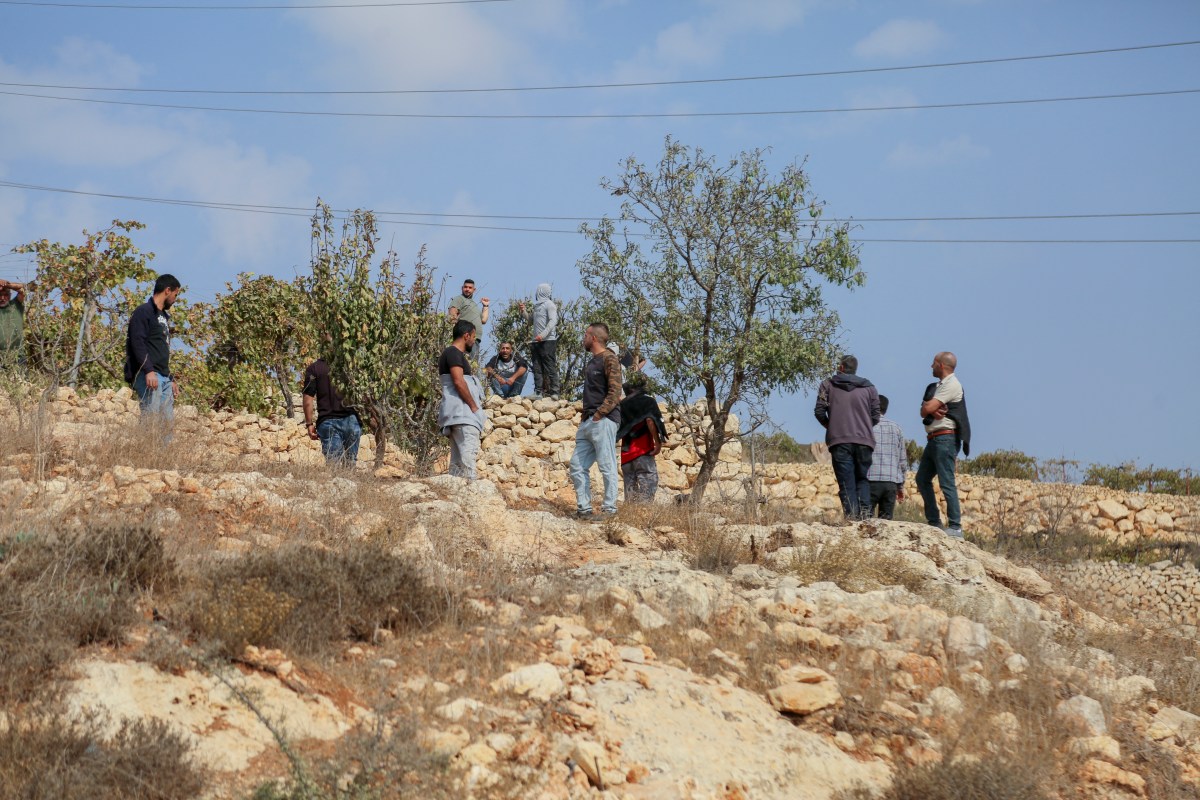
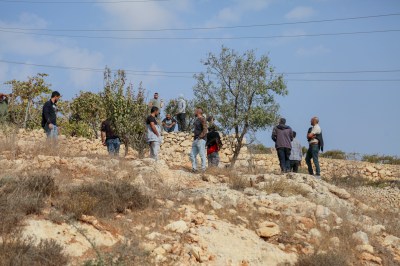
For more than 21 years, Oded Yedaya has traveled to Palestinian villages in the West Bank on Fridays and Saturdays to take photographs. Yedaya was once a member of the elite Israeli Sayeret Matkal commando unit, serving as second-in-command under Yonatan Netanyahu and alongside his younger brother, Benjamin. Today, he’s the principal of an Israeli art school and an activist. But on November 8, while taking photographs of locals harvesting olives in the Palestinian town of Beita, he was attacked by Israeli settlers.
“After an hour of the harvesting, then came about 10 [settlers],” Yedaya told TMD in an interview. He said the settlers began throwing stones at the Palestinians, who ran down the hill for safety, but that he hid and tried to capture the assault with his camera. About two minutes later, though, Yedaya said two settlers spotted him.
“I continued to run, and the next thing that happened, I don’t remember,” Yedaya said. The settlers struck him in the head with a stone, causing jaw and cheekbone fractures, and a wide, deep gash on the upper side of his head above the ear. “I lost consciousness. I don’t know for how long, but when I woke up, I find myself alone lying on the ground.” The settlers had stolen his camera. He called a friend, but with blood covering his phone, he couldn’t share his location.
Medics in a nearby Palestinian village couldn’t stop the bleeding, so Yedaya traveled in a Palestinian ambulance, then an Israeli ambulance, to an Israeli hospital. “I was lucky,” he emphasized. He can now move his jaw, and doctors removed his stitches after 10 days.
Israeli settler violence against Palestinian villagers in the West Bank is not new. But this olive harvest season has seen a significant increase in the frequency and severity of these attacks. According to the Israel Defense Forces, there have been 752 such incidents thus far in 2025—an 11 percent increase from the 675 recorded in all of 2024.
You are receiving the free, truncated version of The Morning Dispatch. To read the full newsletter—and unlock all of our stories, podcasts, and community benefits—join The Dispatch as a paying member.

On November 20 alone, settlers are accused of committing six attacks across the West Bank: beating Palestinians with clubs in Markaz, setting fire to residential buildings between the Palestinian villages of Al-Lubban ash-Sharqiya and Ammuriya, torching an agricultural building in Khirbet Abu Falah, and raiding the village of Beit Furik, despite part of its boundaries falling within Area B—established under the Oslo II Accord—where unauthorized civilians are prohibited from entering by the Israeli government. Settlers even allegedly attacked an 85-year-old Palestinian man and his donkey while he was en route to a nearby mosque, sending him to the hospital.
During a rock-throwing fight between settlers and Palestinians near Bethlehem over the weekend, masked settlers fired on Palestinian villages. Nobody was killed, but Israeli police have opened an investigation into the attack and the Israel Defense Forces (IDF) are controlling the area.
The West Bank, a landlocked territory of about 2,200 square miles on the western bank of the Jordan River, is bordered by Israel to the west and Jordan to the east. Israel captured the territory from Jordan in the 1967 Six-Day War, but under the Oslo Accords brokered in the 1990s, the Israeli government transferred day-to-day civil administration in some areas to the Palestinian Authority. Roughly 3.5 million Palestinians live in towns and cities throughout the territory—which is governed by a patchwork of Palestinian civil authority and Israeli military law—as do many Israelis. According to a March 2025 report from the United Nations Human Rights Office of the High Commissioner, approximately 500,000 Israeli settlers now live in the territory, with an additional 230,000 in East Jerusalem—counted separately because Israel formally annexed the eastern half of the city in 1980, though this is disputed internationally.
The vast majority of these settlers are not violent. Nimrod Goren, the founder and president of Mitvim (The Israeli Institute for Regional Foreign Policies), told TMD that the three most prominent types of Israelis who move to the West Bank are:
- Those seeking financial opportunities and economic development;
- Orthodox Jews moving there for religious reasons; and
- Radical political extremists.
The third group is where the problems arise.
“The extremists will usually go and settle into all kinds of unrecognized hilltops, places around the West Bank, and they will feel as if they can take the law into their own hands,” he said. Though they also target Israeli soldiers and those providing aid to Palestinian villages in the West Bank, Goren said the settlers seem like they just “want to look for where they can hurt Palestinians or Palestinian property.”
Many of the violent settlers—primarily young men—come from backgrounds of “juvenile delinquency, unsupervised activity, [and] family collapse,” explained Sara Yael Hirschhorn, an American Jewish Studies professor and senior researcher at the University of Haifa. She told TMD that they’re “looking for a kind of social outlet. And sometimes that overlays nicely with radical politics.”
Yohanan Tzoreff—a senior researcher at Tel Aviv University and former head of the Palestinian-Arab Division in Israel’s Ministry of Intelligence and Strategy—told TMD that many of the young violent settlers “feel that if they will attack the properties of [Palestinians] or try to prevent them from doing the work of agriculture, as farmers, nobody will hurt them.” They attack Israeli soldiers as well, because, according to Hirschhorn, they “feel that the IDF is an impediment to their ability to build outposts and wreak mayhem.”
Tzoreff added that these settlers feel empowered, in part, by Hamas’ October 7, 2023, massacre and the belief that Palestinian property in the West Bank “belongs to them.” Mairav Zonszein, an Israeli-American journalist and senior analyst at the International Crisis Group, affirmed this point: October 7 “definitely gave a lot more trauma, anger, and kind of energy to this, to settler violence specifically, and to the idea that Israel needs to act very forcefully in every place that it exists.” Continued attacks by Palestinian terrorists from the West Bank—including the September shooting that killed six Israelis at the Ramot Junction in Jerusalem—only add to the tension.
And yet many violent perpetrators have, to date, escaped criminal charges. “There are almost never arrests, and when there are arrests, there’s almost never indictments,” Zonszein told TMD. “They know that even if they might get arrested, they’ll probably be freed.”
On November 11, for example, Israeli police arrested four settlers suspected of taking part in what authorities described as “acts of extremist violence” in an industrial zone in the northern West Bank, near the Palestinian villages of Beit Lid and Deir Sharaf, setting fire to vehicles and attacking a factory and agricultural land. But only one of the four—a teenage minor—has thus far been charged. He faces terrorism-related criminal offenses.
Israeli President Isaac Herzog quickly condemned the attacks, as did IDF Central Command chief Maj. Gen. Avi Bluth. “The reality in which anarchist fringe youth act violently against innocents and against security forces is an intolerable and extremely serious situation that must be dealt with firmly,” Bluth said. On November 21, IDF Chief of Staff Lt. Gen. Eyal Zamir reportedly warned that the continued attacks risk further violence and destabilization in the West Bank. At a certain point, he continued, the situation would require military resources to control, and those would have to be “immediately diverted from the Gaza and Lebanon borders,” despite both areas needing those troops.
But Prime Minister Benjamin Netanyahu took several days to publicly criticize the early November attacks, and Israeli media reported on November 26 that the country’s defense minister, Israel Katz, said during a private parliament committee meeting that the recent string of settler attacks in the West Bank were not acts of “terrorism,” but rather “a disturbance of public order.”
In a Facebook post about her father’s attack, Ella Yedaya addressed Netanyahu directly:
You’ve allowed nationalist terrorism to run wild for years without restraint. You brought the people who incite the burning of villages into your coalition, gave them control over everything happening in the West Bank, in the army, and in the police. You give them backing—to shoot, beat, wound, kill, and burn without interference. And you have the power to stop all of it.
Prosecuting settlers who engage in such attacks is procedurally difficult. Yuval Shany, a public international law professor at the Hebrew University of Jerusalem and former chair of the U.N. Human Rights Committee, told TMD that “prosecuting them in court is often difficult, because they wear masks, [and] they do not rat on one another.”
But these are not insurmountable obstacles. “It takes resources, it takes some effort, but, I mean, it certainly can be done,” Shany continued, suggesting the implementation of more efficient intelligence-gathering operations in West Bank settlements and the development of better processes for interrogating Israeli hilltop youths following incidents.
The violent settlers act with a “sense of impunity,” Shany explained. But he added that “there is a threshold that may have been crossed that will force the legal system to react in more assertive ways than we have seen in the last year.”
On Thursday, Israeli prosecutors indicted a 24-year-old Israeli settler, Ariel Dahari, for attacking Palestinians harvesting olives near the central West Bank village of Turmus Ayya in October. Prosecutors allege that Dahari also physically forced a Palestinian driver out of his car, and that, when the victim attempted to escape on foot, Dahari chased him, pelting him with stones. When he reached the olive pickers, Dahari is alleged to have beaten them with clubs, including a 52-year-old woman, Afaf Abu ‘Olia. She was hospitalized due to her injuries, including skull fractures.
Today’s Must-Read


On November 19, some 200 masked protesters gathered outside Manhattan’s Park East Synagogue to chant, “From New York to Gaza, globalize the intifada,” and “Resistance, you make us proud. Take another settler out.” The open calls for violence rattled Jewish communities across one of the world’s most Jewish cities—but perhaps equally concerning was the response from Mayor-Elect Zohran Mamdani. In a statement, a spokeswoman said that he “has discouraged the language” used at the protest before offering a soft defense of its participants: “He believes every New Yorker should be free to enter a house of worship without intimidation, and that these sacred spaces should not be used to promote activities in violation of international law.” As antisemitic incidents have surged 140 percent and eliminationist rhetoric goes mainstream on both left and right, The Dispatch’s Charlotte Lawson makes the case that we’re witnessing not just criticism of Israeli policy, but the rearing of history’s oldest hatred.
Toeing the Company Line

The Day After
Putting gratitude into practice.
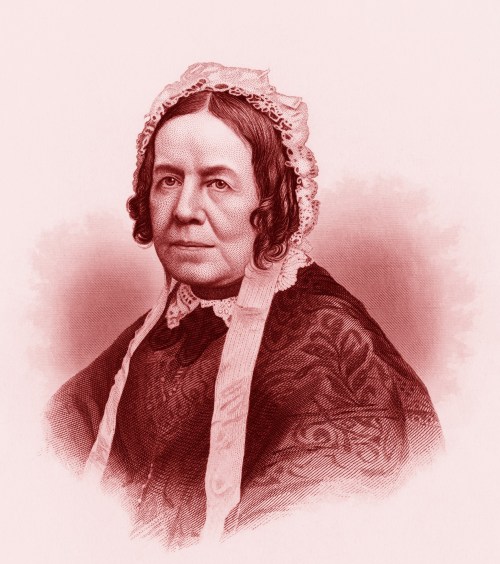
The 19th-Century Influencer Who Invented Thanksgiving
How Sarah Josepha Hale used fashion, fiction, and sheer persistence to give America its beloved holiday.

Why You Should Say Your (Secular) Prayers
Poetry grants us a kind of solace that we need now more than ever.

We Are Pilgrims, Still
On being in the world, and praying from there.

The Manchurian Peace Plan | Roundtable
Three schmucks and their foreign policy agendas.

In Other News
Today in America:
- A Georgia judge dismissed the Fulton County election interference criminal case against Trump after the lead prosecutor, Pete Skandalakis, requested that the case be dropped. “The citizens of Georgia are not served by pursuing this case in full for another five to ten years,” Skandalakis said in a statement.
- A Louisiana man convicted of first-degree murder in 1998 and who was on death row was released on bail after his conviction was overturned. In April, a federal judge ruled that evidence used in the original trial is “not scientifically defensible” and that the victim likely died from “accidental drowning.”
- Three-term Republican Rep. Troy Nehls of Texas announced on Saturday that he would not seek re-election in 2026 and would retire at the end of his term. Later that day, Nehl’s identical twin, Trever Nehls, launched a campaign for his brother’s seat.
- Northwestern University reached a deal with the Trump administration, agreeing to pay $75 million over the next three years in exchange for an end to federal investigations and a return of federal research funding totaling nine figures.
- The National Energy Assistance Directors Association announced on Friday that $3.6 billion in federal funding for the Low Income Home Energy Assistance Program would be distributed to states. Payments have been paused since the federal shutdown.
- Federal prosecutors have charged 59 people for their involvement in fraud schemes in Minnesota that resulted in more than $1 billion in taxpayer money being stolen. The fraud was committed by members of the Somali diaspora, setting up front companies to collect payments for social services that were never provided.
Around the World:
- Rescue and aid operations continue in Indonesia, Sri Lanka, and Thailand, after flooding and landslides killed more than 1,000 people across the three countries.
- Peruvian President José Jerí announced a state of emergency along its shared southern border with Chile to prevent illegal crossings following the recent mass migration of people fleeing Venezuela.
- Hong Kong police continue to search for bodies following massive fires that engulfed several large apartment complexes, with the total death toll climbing to 146.
- Trump issued a pardon for former Honduran President Juan Orlando Hernández, who was handed a 45-year sentence last year for crimes including abetting the illegal entry of cocaine into the U.S. for profit.
- Turkish officials said that two tankers in the Black Sea were “struck” by “an external impact” and caught on fire, but did not provide specifics on the incident. All crew members were safely rescued.
- The election result for Honduras’ Sunday presidential election remains too close to call, with conservative Salvador Nasralla only a few points behind Nasry “Tito” Asfura of the National Party with 43 percent of the vote counted.
On the Money:
- Adobe Analytics projected that American consumers spent $11.8 billion on Black Friday, a 9.1 percent increase from last year’s record.
- Zootopia 2 brought in $96 million at the American box office over the weekend, and $556 million globally since it opened on Wednesday—the highest international opening of the year and the highest ever for an animated movie.
- Nvidia issued a memo to stock analysts pushing back against claims made by famed investor Michael Burry after he bet against the company.
- The Wall Street Journal reported that hardware and software from weapons company Anduril have “continuous operational security violations” and “safety violations.”
- A class action lawsuit, filed in New York, accuses the online financial exchange and prediction market company, Kalshi, for offering “unlawful sports gambling.”*
Worth Your Time:
- “If You Had To Store Something for 100 Years, How Would You Do It?” (Harvard Law)
- Jack Goldsmith on the legal implications of Hegseth’s order to eliminate all suspected drug trafficking offenders in the Caribbean strike. (Executive Functions)
- Yascha Mounk on nearly falling for a scam phone call. (Substack)
- Henry Mace visits Portugal’s elephant sanctuary. (Financial Times)
- John Podhoretz remembers the life of English-Czech playwright Tom Stoppard, who died on Saturday at 88. (Commentary)
Presented Without Comment
New York Times: The Oxford 2025 Word of the Year Is ‘Rage Bait’
Let Us Know
Have any thoughts or questions about today’s newsletter? Drop us a note in the comments or by emailing us at tmd.questions@thedispatch.com. We read every submission, and your message could be featured in an upcoming “Behind the Scenes” segment.
Have any thoughts or questions about today’s newsletter? Become a member to unlock commenting privileges and access to a members-only email address. We read every submission, and answer questions in the following edition of TMD.
Correction, December 1, 2025: This newsletter has been updated to reflect that Kalshi is accused of offering “unlawful sports gambling” in a class action lawsuit, not by federal prosecutors.





Please note that we at The Dispatch hold ourselves, our work, and our commenters to a higher standard than other places on the internet. We welcome comments that foster genuine debate or discussion—including comments critical of us or our work—but responses that include ad hominem attacks on fellow Dispatch members or are intended to stoke fear and anger may be moderated.
With your membership, you only have the ability to comment on The Morning Dispatch articles. Consider upgrading to join the conversation everywhere.