Turn any article into a podcast. Upgrade now to start listening.
Premium Members can share articles with friends & family to bypass the paywall.
Editor’s Note: For the week leading up to Thanksgiving, we’re unlocking The Morning Dispatch for everyone—no paywalls. If you’re a new reader or are on the free list, we hope you enjoy the complete TMD experience. And if you’re a member, thank you for your support. We hope you’ll consider forwarding these next few editions to friends and family you think would value our work.
Happy Friday! A Pennsylvania court told some unfortunate new home owners that the seller didn’t have to disclose the swastika tiled into their basement floor. So, if you go house-hunting this weekend, take a very thorough look around.
Quick Hits: Today’s Top Stories
- The September jobs report—which was released Thursday, seven weeks late due to the government shutdown—showed that the U.S. economy added 119,000 jobs in September, exceeding economists’ expectations. The unemployment rate, however, ticked up from 4.3 percent in August to 4.4 percent, the highest level in four years. August’s job report, which initially showed a gain of 22,000 jobs, was revised downward to show a loss of 4,000 positions. The information, showing the last month of hiring and firing before the government shutdown began, gives no clear signal to the Federal Reserve, which is currently deliberating whether to cut interest rates or to hold them steady at its December meeting. Due to the shutdown, the Bureau of Labor Statistics will not publish the October jobs report and will delay the release of the November numbers.
- The office of Ukrainian President Volodymyr Zelensky confirmed on Thursday that it had received the draft peace plan drafted by U.S. and Russian negotiators, committing to “work on the points of the plan in such a way as to bring the war to a dignified end.” The plan, which Axios obtained, would provide Ukraine with a 10-year-long renewable U.S.-European security guarantee—an offer Trump hasn’t made before—in exchange for Ukraine ceding additional territory to Russia, establishing a demilitarized buffer zone, and shrinking its army. It also precludes the presence of foreign troops in a postwar Ukraine, and would require Ukraine to commit not to join NATO. The plan also states that “The U.S. will receive compensation for the guarantee.” President Donald Trump reportedly endorses the plan, but the White House has stressed it’s a starting point for negotiations rather than a finished product.
- Israeli settlers in the West Bank attacked Palestinians in several villages overnight, using clubs and reportedly setting vehicles and a garage on fire and wounding several people. These are the latest incidents of settler violence in recent weeks, which were quickly condemned by Israeli President Isaac Herzog and IDF Central Command chief Maj. Gen. Avi Bluth. Prime Minister Benjamin Netanyahu eventually condemned the violence too, five days after Herzog. Also on Thursday, Netanyahu said he spoke with U.S. Secretary of State Marco Rubio about the recently announced agreement for the U.S. to sell F-35 fighter jets to Saudi Arabia, and that Rubio had assured him that Israel would maintain its “qualitative military edge” in the region. On Friday in Singapore, U.S. Ambassador to the United Nations Mike Waltz said the ceasefire between Israel and Hamas was holding, even if it was “fragile,” following a week in which Hamas terrorists reportedly fired on Israeli soldiers and Israel conducted airstrikes in the Gaza Strip.
- U.S. District Judge Jia Cobb ruled Thursday that President Trump’s deployment of the National Guard to Washington, D.C., illegally superseded city officials’ authority over policing in the district, although she put the ruling on hold for 21 days to allow for an appeal. The case was brought by District of Columbia Attorney General Brian Schwalb on behalf of the city government and was supported by multiple Democratic-controlled states. In response to the ruling, White House spokeswoman Abigail Jackson said that “President Trump is well within his lawful authority to deploy the National Guard in Washington, D.C., to protect federal assets and assist law enforcement with specific tasks.” In her ruling, Cobb wrote that the federal government could not deploy troops “for non-military, crime-deterrence missions in the absence of a request from the city’s civil authorities.”
- Transportation Secretary Sean Duffy on Thursday unveiled the design specifications for an advanced female crash test dummy, the THOR-05F. This is the first step in the regulatory process to eventually mandate its use in federal vehicle safety testing, and allows automakers to test their cars against this design before hard requirements are set. The current male dummy is a 50th-percentile male, but the female dummy, added in the 2000s, is under 5 feet tall and weighs less than 108 pounds, representing just 5 percent of American women. The new dummy has more than 150 sensors and better represents female anatomy, including differences in the neck, collarbone, pelvis, and legs. Despite the general safety improvements in cars, studies have found that women wearing seat belts are 73 percent more likely to be injured in head-on crashes than men wearing seat belts. The THOR-05F is expected to be used in new car safety testing by 2027 or 2028.
Chain Reaction
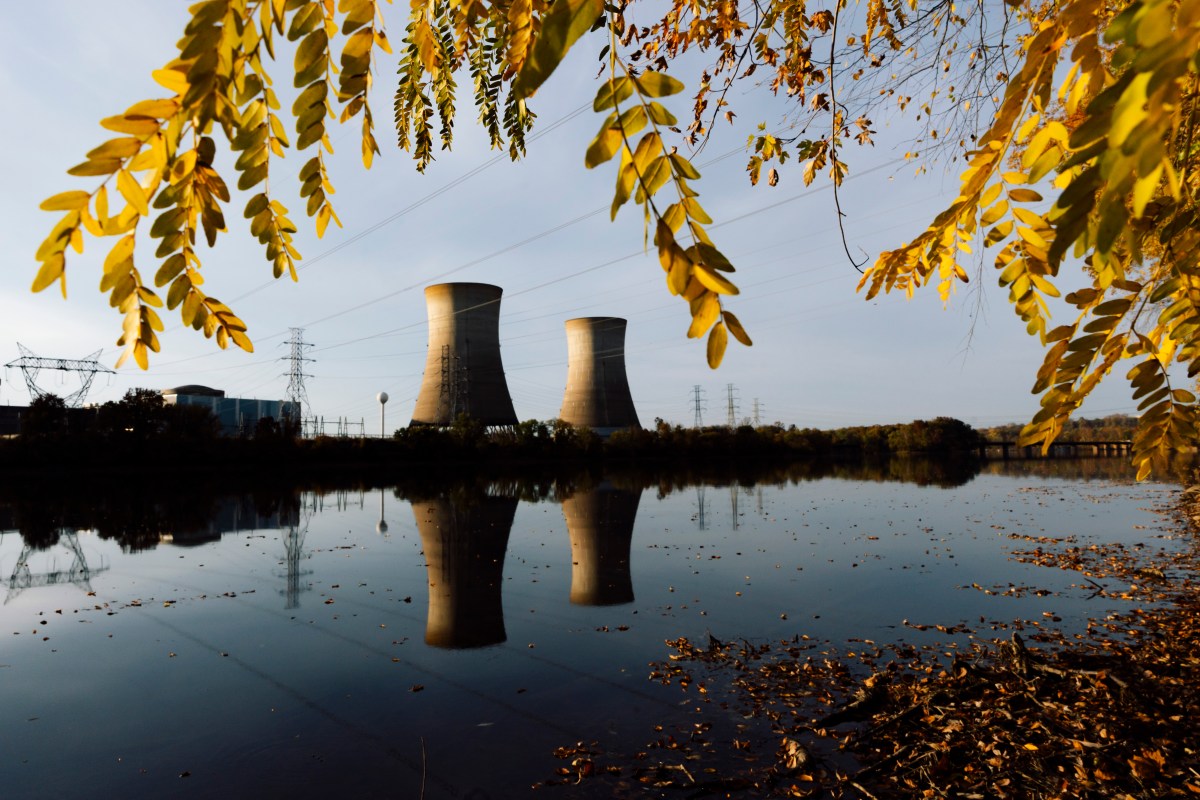
On Tuesday, the Energy Department announced that it had approved a $1 billion loan to Constellation Energy for the construction of the Crane Clean Energy Center, a nuclear facility in Pennsylvania. The money would, according to U.S. Secretary of Energy Chris Wright, “help ensure America has the energy it needs to grow its domestic manufacturing base and win the AI race.” Constellation is building the station with Microsoft, which will power its data centers.
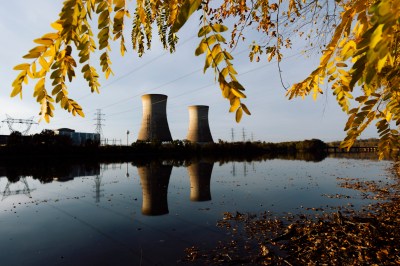
But the “Crane Clean Energy Center” didn’t always go by that name. Located near Harrisburg, on the Susquehanna River, the facility used to be known as Three Mile Island—the site of America’s most famous nuclear accident. In 1979, a reactor meltdown at the facility released a small amount of radioactive material into the surrounding area, and scared generations of American politicians and voters out of trusting nuclear power. Unsurprisingly, Wright’s statement leaves out the facility’s former name.
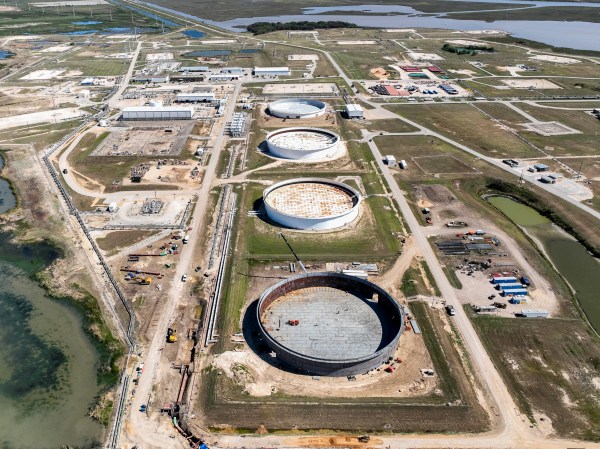
Three Mile Island’s—sorry, the Crane Clean Energy Center’s—rehabilitation is a sign that the winds have shifted for U.S. nuclear energy (hopefully not in the direction of any population centers). Rapidly growing electricity demand, keen government interest, and the development of new technologies mean that nuclear energy may be on the cusp of a “renaissance,” as recent executive orders by President Donald Trump put it.
And America needs more power. By 2040, the country will require 35 to 50 percent more electricity generation, driven by manufacturing growth, the electrification of existing power systems, and the build-out of AI data centers. The International Energy Agency projects that data centers will account for half of the increase in U.S. electricity demand through 2030. Worldwide, electricity demand is expected to rise by 40 percent over the next decade, with AI development accounting for nearly 10 percent, and automobile production and the widespread adoption of air conditioning also being major factors.
Typically, The Morning Dispatch’s main story is cut off here, with the full item reserved for paying members. We are unlocking the newsletter this week to give free readers a taste of what they’re missing out on. To get the full version in your inbox every day—and unlock all of our stories, podcasts, and community benefits—join The Dispatch as a paying member.
Worldwide data center investment is expected to exceed $580 billion in 2025—more than the annual global investment in oil exploration and production. And because data center construction is concentrated in areas with cheap land and good fiber-optic connections, they’re radically increasing the energy needs of many communities. Until recently, the Omaha Public Power District in Nebraska assumed that new power demand would grow by roughly four megawatts a year: enough to power a few thousand homes. That number is now above 100 megawatts.
But how to meet that demand has split along party lines. Under former president Joe Biden, the U.S.—at least in theory—embraced an “all of the above” approach that promoted renewable energy, fossil fuels, and nuclear energy, but critics contended the White House focused on renewables above everything else.
In President Donald Trump’s second term, the U.S. has veered away from the Biden approach, terminating or limiting subsidies for many green energy projects and reinvesting in coal-fired power plants. But nuclear power has remained one of the government’s favored industries (along with geothermal power).
And given the costs of starting up nuclear projects, government support may be needed to get a renewed nuclear power construction industry off the ground. The only two new large U.S. nuclear reactors built in the last several decades, Vogtle 3 and Vogtle 4 in Waynesboro, Georgia, together cost more than $30 billion, more than twice the original $14 billion projected cost.
“Ultimately, to scale these technologies, it’s going to require a mix of private financing and targeted public financing,” Niko McMurray, the managing director for international and nuclear policy at ClearPath, a clean-energy advocacy group, told TMD.
That’s partly because, in the U.S., building reactors is so rare. Almost all commercial nuclear energy generation in the U.S., powered by 94 reactors, came online between 1970 and 1990, so pipelines of skilled workers, supplies of specialized equipment, and basic project-management skills have long since dried up.
But the experience of Vogtle’s construction might point the way forward, Judi Greenwald, the president of the Nuclear Innovation Alliance, told TMD. Even though the project had massive cost overruns, including the lead company, Westinghouse, going bankrupt, Vogtle 4 was built faster than Vogtle 3, Greenwald said. “That gave a lot of credence to people who said ‘we can get our groove back in this,’” she said. “We just have to build more.”
The U.S. also has non-economic incentives to invest more in nuclear energy. Currently, China and Russia are trying to become the leading providers of new nuclear energy. Of the 70 grid-connected nuclear reactors under construction and 110 under planning and proposal, the vast majority are being built by Russia or China, mainly in Asia. The U.S. wants to change that, as part of the White House’s “Energy Dominance Agenda.”
As global energy supply chains become increasingly vulnerable to geopolitical tensions, the U.S. can both secure its own nuclear energy supply and market it to other countries, Jennifer Gordon, the director of the Nuclear Energy Policy Initiative at the Atlantic Council, told TMD. Russian reactors, she said, are based on a build-own-operate model, where the end product is “like a little piece of Russia sitting in your country.” The reactor’s “ownership is Russian, the security force could be Russian protecting the plants, and Russia may then have the ability to turn off the power,” Gordon said.
In contrast, U.S. production processes are much more transparent, and countries can assume control of the reactors after they’ve been built. In recent months, several countries have signed nuclear power agreements with the U.S.—most recently Saudi Arabia, which this week agreed to a future U.S.-Saudi nuclear power partnership. And in August, Hungary committed to buying 10 U.S.-designed small modular reactors (SMRs).
Traditional nuclear power plants produce on average 1,000 megawatts of power, and can make up to 2,000—suitable for powering large-scale projects like municipal electrical generation—and are built one at a time, on-site. SMRs generate 300 megawatts or less, and can be built in factories and then deployed for smaller projects, such as industrial plants and water desalination facilities. Though China and Russia are building more large nuclear plants, SMRs and even smaller micro-reactors are one area where the U.S.—and its startup scene—may possess a qualitative advantage.
Valar Atomics, the Palantir-backed firm based in California, announced Monday that it had become the first nuclear startup to achieve criticality, or a continuous chain reaction that powers its reactor. Other firms are using SMRs, along with new tech—like using molten chloride salts as fuel, which is much safer than uranium—to create new commercial uses.
TMD spoke to Joel Spangenberg, the U.S. country head for Core Power, a British startup that aims to create floating nuclear power plants and nuclear-powered motors for merchant vessels. Core Power’s business plan hinges on assembling large numbers of SMRs at a single site and then fitting them onto ships or towing them to offshore basing sites, rather than building bespoke plants at individual sites. “We’ll be able to get the learning curve effect and drive down the cost,” he said.
But America’s road toward renewing its nuclear industry is far from assured, said Rowen Price, a policy adviser on the nuclear energy team at Third Way, a left-of-center think tank. Significant financing commitments from the government, permitting reform, and redeveloped equipment pipelines—all are needed to regrow the U.S. nuclear industry
But she noted the political and commercial prospects have rarely been brighter. “A lot of it is kind of new for us, because we haven’t done a lot of this in a while, and so we’re kind of learning from the beginning,” she said.
Today’s Must-Read


Abraham Lincoln understood the meaning of the American Civil War better than anyone in the United States. It was a war over slavery. But it was also a religious war. In his second inaugural address, Lincoln made that clear: “Both [sides] read the same Bible and pray to the same God; and each invokes His aid against the other.” John Fea, distinguished professor of history at Messiah University, examines how Northern and Southern clergy mined the same Scripture for opposite conclusions, creating what Lincoln recognized as a profound theological crisis. Fea draws unsettling parallels to today, where Americans still invoke divine authority on opposing sides of culture war battles—offering a sobering historical lens for understanding how religious conviction can deepen rather than bridge political divides.
Toeing the Company Line

How to Destroy a Multibillion-Dollar Industry at Lobbyists’ Request
The hemp industry is an amazing free market success, and Congress just killed it.

Stay ‘Insubordinate’
It’s a good thing to be if you’re a journalist.
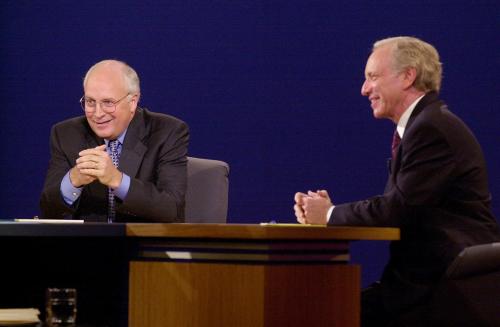
The Unflappable Dick Cheney
The former vice president provided a serious, calming presence when stakes were highest.
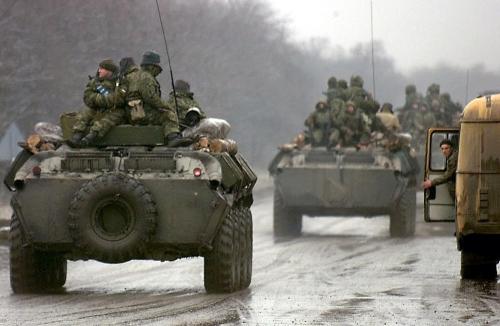
Europe’s Hidden Tinderbox
Russia’s hold on the South Caucasus is slipping, and America should pay attention.

In Other News
Today in America:
- The Coast Guard denied a Washington Post report that it planned to stop classifying symbols such as the swastika and nooses as “hate symbols,” and reiterated that it forbids these symbols in a later policy update document.
- Former Vice President Dick Cheney was mourned yesterday by figures including George W. Bush, John Boehner, and Joe Biden during a funeral at Washington, D.C.’s National Cathedral.
- The Department of Justice is examining how it handled a mortgage fraud investigation into Democratic Sen. Adam Schiff and whether the investigation was improperly influenced by allies of President Trump.
- The Center on American-Islamic Relations (CAIR) sued Texas Gov. Greg Abbott and Attorney General Ken Paxton following Gov. Abbott’s designation of the group as a terrorist organization.
Around the World:
- A public inquiry found that the U.K. government’s early response to the COVID‑19 pandemic was “too little, too late,” and attributed up to 23,000 avoidable deaths to a “failure to appreciate the scale of the threat” and a lack of urgency by the government.
- Severe rains and floods in central Vietnam have killed at least 41 people since the weekend.
- British Prime Minister Keir Starmer is expected to approve a new Chinese embassy in London—despite espionage concerns—after MI5 and MI6 reportedly gave it the green light. He’s also expected to visit China early next year.
- A Nigerian court convicted separatist leader Nnamdi Kanu of seven terrorism-related charges and sentenced him to life imprisonment, marking the end of a decade-long trial and a significant moment in the country’s crackdown on the Biafra separatist movement in the country’s southeast.
On the Money:
- After a brief upswing on Nvidia’s positive third-quarter report, U.S. stock indices fell substantially. The S&P 500 is on track for its worst November performance since 2008.
- Walmart posted stronger-than-expected third-quarter earnings and raised its year-end projections, citing growing market share and the company’s relatively successful management of tariff costs thus far.
- The Trump administration announced plans for new oil drilling projects off the coasts of California and Florida, leading to pushback from Florida Gov. Ron DeSantis and California Gov. Gavin Newsom.
- Two thousand Starbucks baristas across the U.S. are now on strike, in an effort to secure a collective bargaining agreement with the coffee giant.
Worth Your Time:
- “A Startup’s Bid to Dim the Sun” (The New Yorker)
- Thomas Wright breaks down the proposed plan for Ukraine. (The Atlantic)
- Doug Bandow argues the U.S. shouldn’t go to war in Nigeria. (The American Conservative)
- Andrew McCarthy on the “corrupt culture” of sports gambling. (National Review)
- The Friends YouTube channel has released the final eight unreleased episodes of the spin-off show, Joey. (YouTube)
- Out today: Wicked: For Good and Sisu: Road to Revenge in cinemas, and new music from De La Soul, Lance Roark, Aya Nakamura, and Annisokay, everywhere good music is found.
Presented Without Comment
New York Times: Trump Accuses Democrats of Sedition, ‘Punishable by Death,’ Over Message to the Military
Also Presented Without Comment
South China Morning Post: Cockroach Coffee: China Museum Offers Insect Brew for US$6, Assures Patrons of Its Safety
Let Us Know
Have any thoughts or questions about today’s newsletter? Drop us a note in the comments or by emailing us at tmd.questions@thedispatch.com. We read every submission, and your message could be featured in an upcoming “Behind the Scenes” segment.
Have any thoughts or questions about today’s newsletter? Become a member to unlock commenting privileges and access to a members-only email address. We read every submission, and answer questions in the following edition of TMD.




Please note that we at The Dispatch hold ourselves, our work, and our commenters to a higher standard than other places on the internet. We welcome comments that foster genuine debate or discussion—including comments critical of us or our work—but responses that include ad hominem attacks on fellow Dispatch members or are intended to stoke fear and anger may be moderated.
With your membership, you only have the ability to comment on The Morning Dispatch articles. Consider upgrading to join the conversation everywhere.